

· By David Olu
Toilet Paper's Forever Chemicals and the Bidet Attachment
In 2023, a team of Florida scientists recruited volunteers to collect toilet paper from several continents, then tested the rolls for "forever chemicals." They found them. The results say a lot about where our waste goes, and they make an unexpected argument for the bidet attachment.
A strange shopping list
The study came out of the University of Florida and was published in March 2023 in Environmental Science & Technology Letters. The authors were Jake Thompson, Boting Chen, John Bowden, and Timothy Townsend, a professor of environmental engineering.
The team gathered rolls sold in North, Central, and South America, in Africa, and in Western Europe. They also collected sewage sludge, the solid leftovers from wastewater treatment, from eight treatment plants in Florida. Then they screened both for 34 different PFAS compounds.
PFAS, short for per- and polyfluoroalkyl substances, are a huge family of human-made chemicals prized for resisting water, grease, and heat. They're called forever chemicals because they break down so slowly in nature.
What turned up
The most common compound in both the paper and the sludge was one called 6:2 diPAP. The levels were low, in the parts-per-billion range. The concern is what it can become. Chemicals in this group can convert over time into more stable PFAS, including PFOA, a compound that has been flagged as a possible cause of cancer.
How does a chemical like that end up in something as plain as toilet paper? According to the American Chemical Society's summary, some manufacturers use PFAS when turning wood into pulp, and traces can stay behind in the finished sheet. Recycled paper can carry PFAS from its earlier life as packaging or other products.
The researchers estimated that toilet paper use adds somewhere between 6.4 and 80 micrograms of 6:2 diPAP per person per year to wastewater systems.
The honest part: it depends where you live
Here's the twist most headlines skipped. In the United States and Canada, the team calculated that toilet paper accounted for only about 4% of the 6:2 diPAP in sewage. In Sweden, the figure was about 35%. In France, it reached as high as 89%.
That means North Americans send plenty of PFAS down the drain from other sources, such as cosmetics, textiles, and food packaging. Toilet paper is a real contributor, but not the main one here. The authors' point was narrower and still important: toilet paper deserves a place on the list of sources, and in some countries it sits near the top.
Where the sludge goes next
A flushed chemical doesn't vanish. Treatment plants clean the water, but many PFAS settle into the sludge. Some of that sludge is then spread on farm fields as fertilizer, under the friendlier name biosolids.
In January 2025, the Environmental Protection Agency released a draft risk assessment on that practice. Its modeling found that health risks could exceed acceptable levels for some farm scenarios when sludge contains just 1 part per billion of PFOA or PFOS. That is a very small amount.
Maine didn't wait. In April 2022, Governor Janet Mills signed a law banning the land application of sewage sludge and sludge-based compost, the first state to do so, after contaminated fields forced some family farms to shut down.
Drinking water is the other end of the pipe. In 2024 the EPA set enforceable limits of 4 parts per trillion for PFOA and PFOS in public water. In May 2026, the agency proposed keeping those limits while letting some water systems request two extra years, to 2031, to comply.
One flush you can change
None of this can be fixed from a bathroom. PFAS come from too many places, and most of the cleanup belongs to manufacturers, utilities, and regulators.
But every home controls one small input: how much paper goes into the bowl each day. Paper does most of its work by wiping, so people tend to use a lot of it. Water does the cleaning with no pulp at all. With a bidet, most people still pat dry, but that takes a sheet or two instead of a wad. Less paper in means less of whatever that paper carries.
It isn't a cure. It's a lever, and it's one of the few in this story that sits within arm's reach.
Water in, less paper out
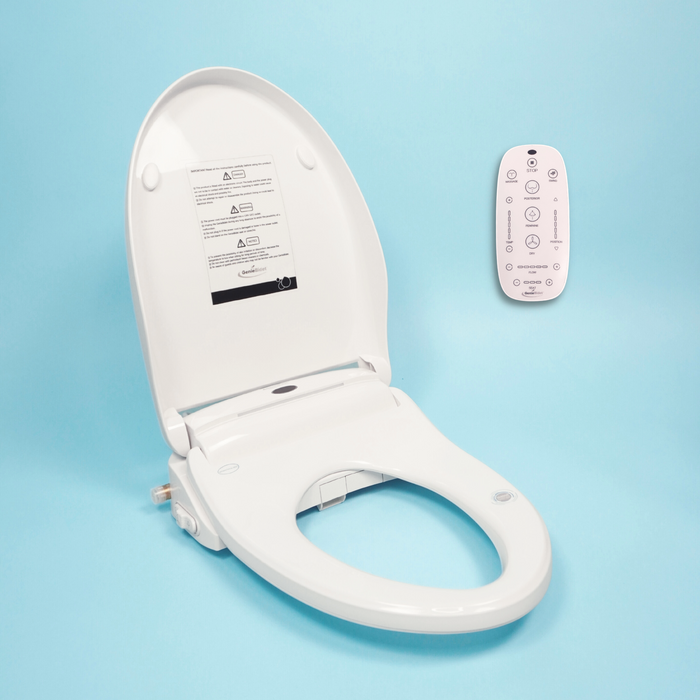
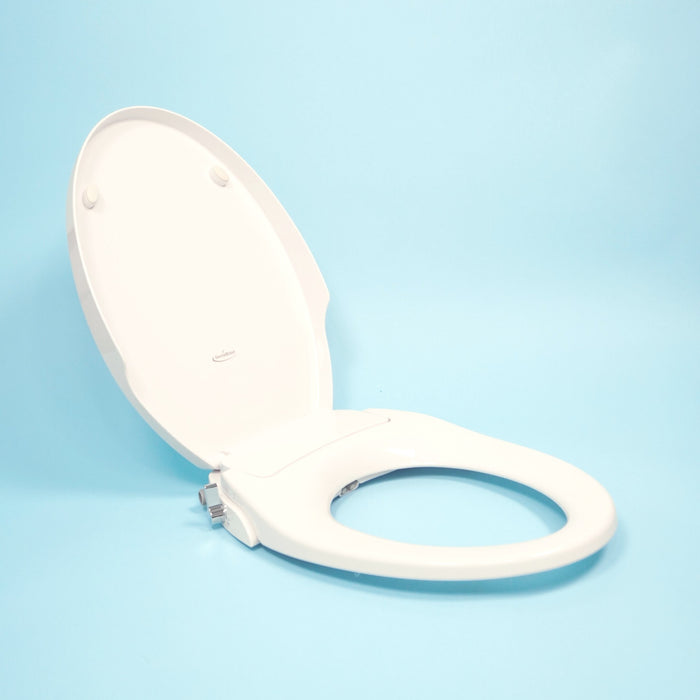
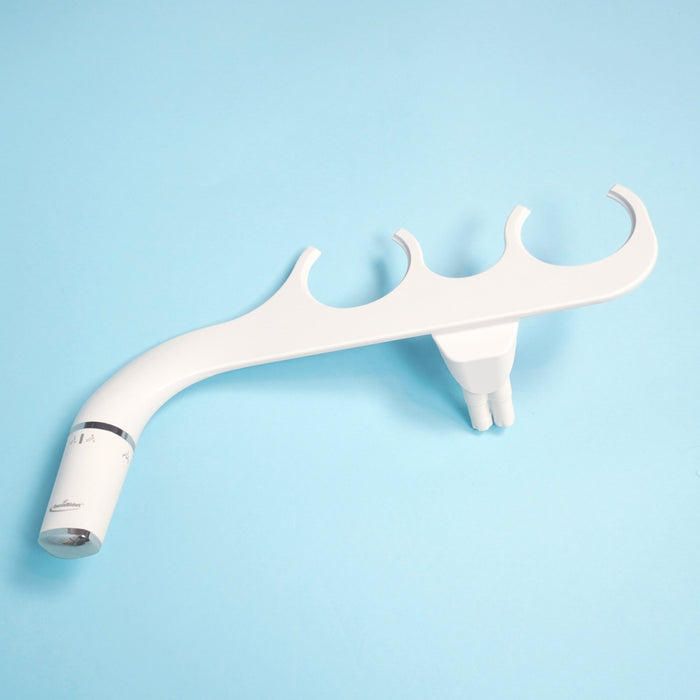
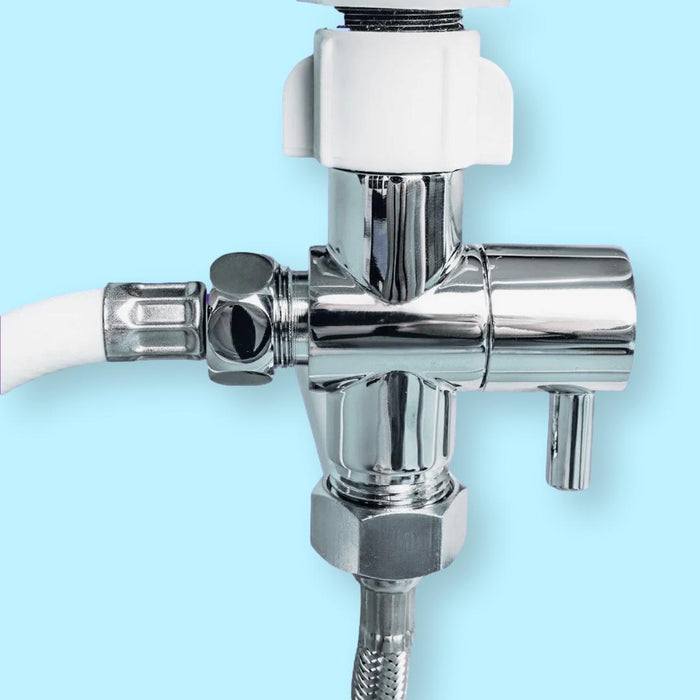
A bidet attachment is the simplest way to pull that lever. The GenieBidet attachment slides under your existing toilet seat and runs on household water pressure, with no outlet, wiring, or batteries. It sprays room-temperature water from dual self-cleaning nozzles for rear and front washing, with a dial to set the pressure. Most people install it in about 15 minutes using the included T-connector.
You can't clean up the watershed on your own. You can cut down what you add to it. See the GenieBidet toilet attachment.