

· By David Olu
Toilet Scrolling and the Case for a Bidet for Hemorrhoids
Two out of three adults in a Boston hospital study admitted they take their phone to the toilet. The ones who did had a 46% higher chance of hemorrhoids, a finding that turns a harmless habit into a medical question and puts the bidet for hemorrhoids conversation in a new light.
The phone didn't do it by itself. The minutes did.
The study that measured the habit
In September 2025, a team at Beth Israel Deaconess Medical Center in Boston published a paper in the journal PLOS One with a plain title: smartphone use on the toilet and the risk of hemorrhoids. The first author was Chethan Ramprasad. The senior author was Trisha Pasricha, a gastroenterologist at Harvard Medical School.
The design had one smart twist. Instead of relying only on people to describe their symptoms, the team recruited 125 adults who were already booked for a screening colonoscopy. Each person filled out a survey about toilet habits, diet, exercise, and straining. Then the doctors doing the colonoscopy looked for hemorrhoids directly. Nobody had to guess.
About 43% of the group had hemorrhoids. Some 66% said they used a phone on the toilet, and that group skewed younger. After the researchers adjusted for age, sex, body weight, exercise, fiber intake, and straining, phone users still came out with a 46% higher risk.
It's the clock, not the screen
The more telling number was about time. Among phone users, 37% said they usually stayed on the toilet for more than five minutes. Among people who left the phone elsewhere, only 7.1% did.
What were they doing in there? The most common answer was reading the news, at about 54%. Social media came next, at about 44%.
One result stood out. Straining, the usual suspect, was not linked to higher hemorrhoid risk in this group. That points the finger at sitting time itself.
The researchers' working explanation is simple anatomy. A toilet seat is an open ring. Unlike a chair, it gives the pelvic floor no support. Sit there long enough and gravity plus pressure can make the blood-filled cushions near the anus swell. A phone keeps you there. As Pasricha has pointed out, the apps on it are designed to hold your attention, and they work just as well on a toilet as on a couch.
Pasricha's advice in the study's press release was blunt and cheap: leave the phone outside, and aim for a visit that lasts a few minutes. If it's taking longer, ask whether your body needed the time or your attention was somewhere else.
A common problem with a real price tag
Hemorrhoids are easy to joke about and common enough that the jokes land. The National Institute of Diabetes and Digestive and Kidney Diseases says they affect about 1 in 20 Americans. About half of adults over 50 have them.
The PLOS release put a dollar figure on it. In the United States, hemorrhoids lead to nearly 4 million doctor and emergency room visits every year, and more than $800 million in health care spending.
The study has limits, and the authors say so. It was small. It came from one hospital. It captured one moment in time, so it shows a link, not proof of cause. The team wants follow-up work that tracks people over months and tests whether cutting phone time helps. Even so, the advice it supports carries almost no downside. Nobody's health suffers from shorter bathroom breaks.
The part nobody scrolls past: cleanup
Shorter sits are half of a good routine. The other half happens after you stand up.
Dry toilet paper works by friction. For healthy skin, that is mostly fine. For irritated tissue, it is a problem. Cleveland Clinic has noted that wiping can cause chafing and tiny cuts, and that bidets can be more comfortable for people dealing with hemorrhoids or fissures. People with a flare-up often wipe again and again, which adds rubbing to skin that is already sore.
Water changes the job. It rinses rather than scrapes. Most people pat dry afterward with a small amount of paper or a soft towel. That's a gentler sequence for skin that is already having a bad week. So the practical takeaway from the Boston study has two parts: spend less time sitting, and be kinder to your skin once you're done.
A simple upgrade for the minutes that count
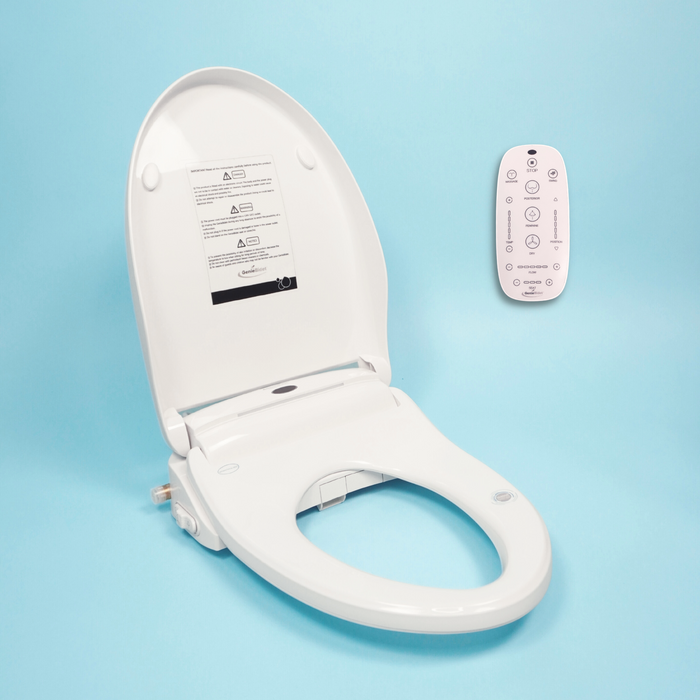
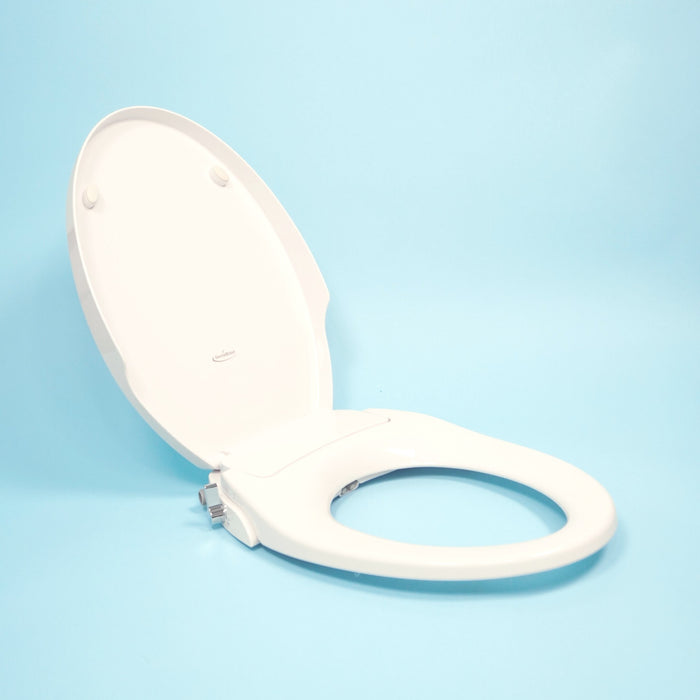
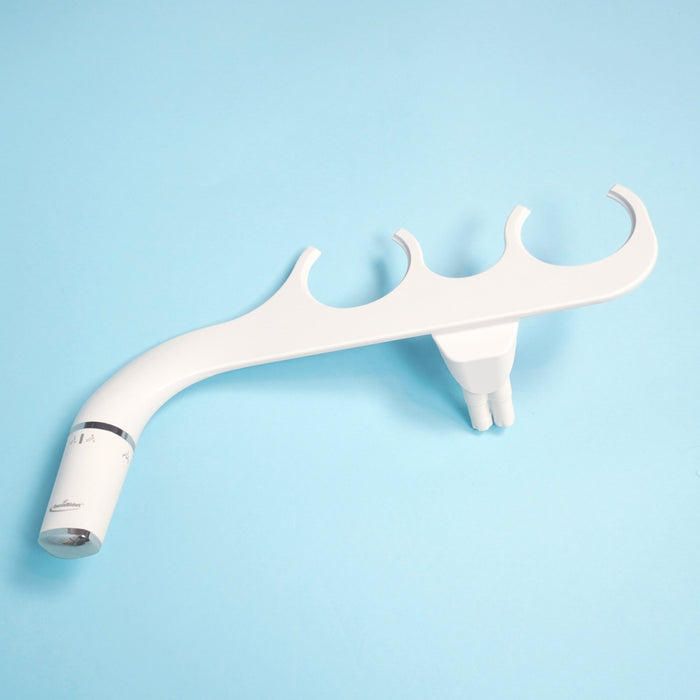
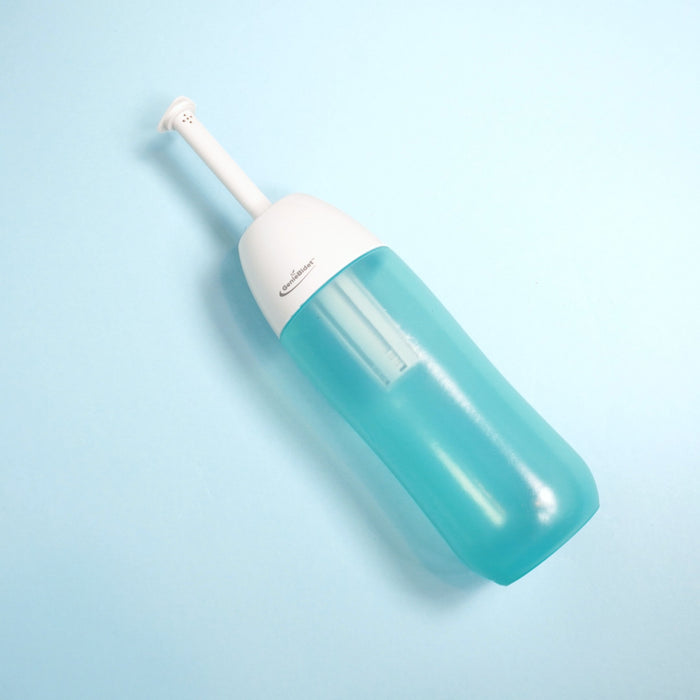
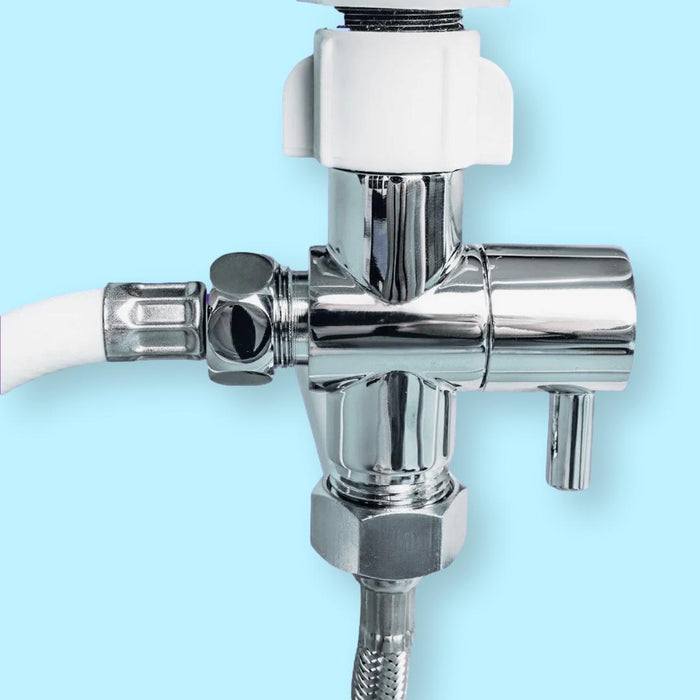
If you want a bidet for hemorrhoids care without a remodel, the GenieBidet attachment fits under the toilet seat you already own. It runs on your home's water pressure, with no outlet, wiring, or batteries. The spray is room temperature, and a dial lets you start soft and adjust from there. Dual self-cleaning nozzles handle rear and front washing, and most people finish the install in about 15 minutes with the included T-connector.
Leave the phone on the counter. Then let water do the cleanup. See the GenieBidet toilet attachment.
This article is for general information and is not medical advice. If you have bleeding, ongoing pain, or other symptoms, talk with a doctor.