

· By David Olu
Finland's Toilet Hose Is a Non-Electric Bidet in Disguise
Finland has about 3.3 million saunas for 5.5 million people, and according to the company that makes them, it has even more of something else: a little hand shower hanging next to the toilet. It is a non electric bidet in all but name, and most visitors have no idea what it's for.
The hose that confuses tourists
Walk into a Finnish home, café, or train station restroom and there's a good chance you'll find it. A slim chrome head on a flexible hose, clipped to the wall between the washbasin and the toilet. It has a trigger, like a garden sprayer.
Foreign visitors tend to invent explanations. One writer at the expat blog Big In Finland admitted he spent his early days in the country treating it as a tool for rinsing the floor and sink. He noted, with some suspicion, that he'd seen the same hose in bars, restaurants, and bus stations.
For Finns, the purpose is obvious. You open the tap on the washbasin, pick up the hand shower, and squeeze the trigger. The water leaves the faucet and comes out of the hose instead. It's used for washing after the toilet. The Finnish word for it is käsisuihku, which just means "hand shower." The best-known version is the Oras Bidetta, made by a Finnish faucet company.
An idea borrowed from an American kitchen
The strangest part of the story is where the idea came from. Oras launched the first version in 1968. The company's own history admits nobody is sure who designed it. The story passed down inside the firm is that an engineer saw a new American kitchen faucet with a separate side sprayer and wondered why the same trick couldn't work in the bathroom.
So the device that America mostly ignores in the bathroom started as an American kitchen gadget.
The first model was clumsy. To use it, you had to twist separate hot and cold handles to get the right water, then push a diverter on the faucet, all while sitting on the toilet. Sales were slow.
The fix, and the ad everybody remembers
Two changes turned a novelty into a national habit.
The first was engineering. In the 1970s Oras built a single-lever faucet that set temperature with one handle. It then added a small part called an ejector, which let water switch between the faucet and the hand shower. The company patented that ejector design in 1979, and the basic models still work much the same way today. That's also when the product got its official name, Oras Bidetta.
The second was advertising. Finland had only two TV channels at the time, so nearly the whole country saw the same commercials. Oras went for humor and showed people on the toilet using the hand shower, including a mustached character fans still call the Bidetta Man. The clips still resurface online decades later. After the campaign, according to Oras, sales took off and the hand shower became a standard fixture in Finnish homes.
A sauna nation with a washing habit
Saunas get the headlines. In December 2020, UNESCO added Finnish sauna culture to its list of the Intangible Cultural Heritage of Humanity, the country's first entry. The UNESCO listing counts 3.3 million saunas across the country.
Oras claims that there are more Bidetta hand showers in Finland than saunas. That's a company boast, not a census, but it tells you how ordinary the thing is. Nobody in Finland thinks of it as a luxury gadget. It is plumbing, like a towel bar.
Notice what the Finnish hand shower does not need. It has no motor, no heater, no display, and no plug. It works because a pipe already has water pressure behind it. A lever and a valve do the rest.
Your bathroom already has the pipe
That's the useful lesson for American bathrooms. The Finnish solution works because it borrows what the room already has: a water line and a little pressure. You don't need a new outlet or an electrician to wash with water. You need a way to route the supply that is already a few inches from the toilet.
It also explains why the habit spread so fast once the design got easy. People don't resist washing. They resist fiddly steps. When the handles, diverters, and guesswork went away, a whole country switched and never looked back.
The American version of the same idea
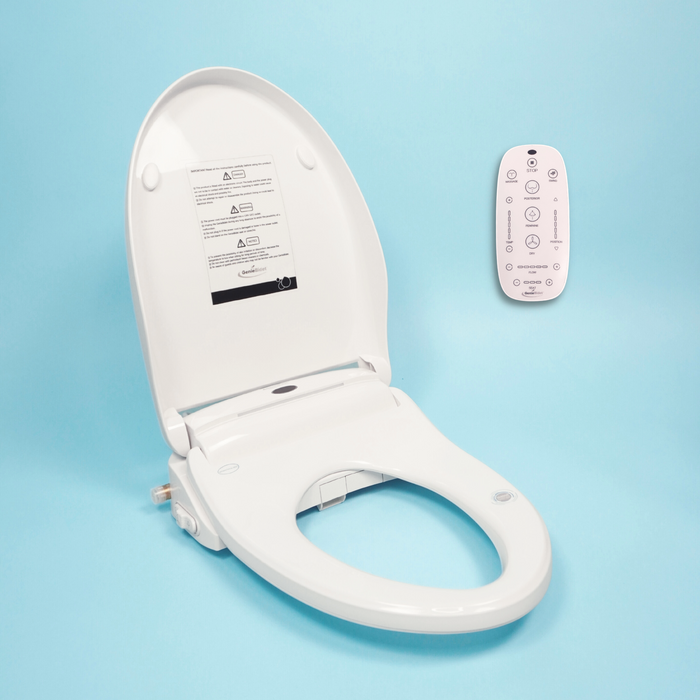
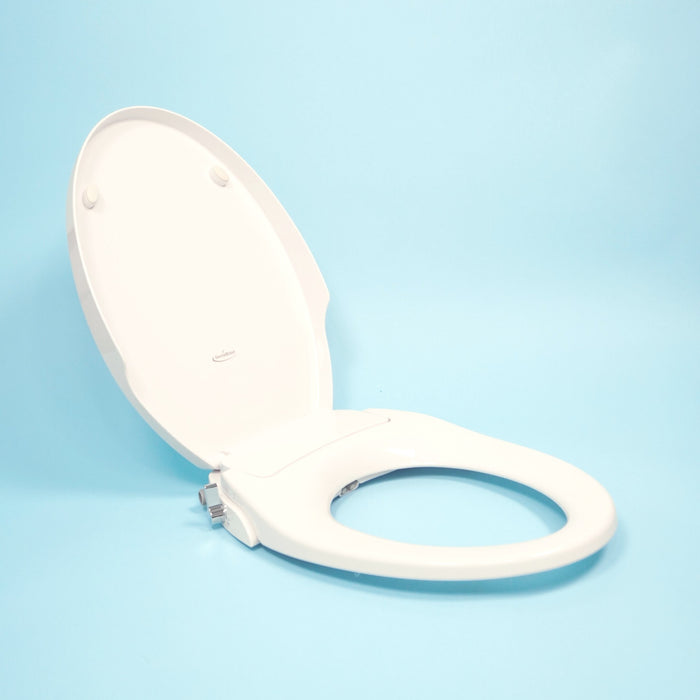
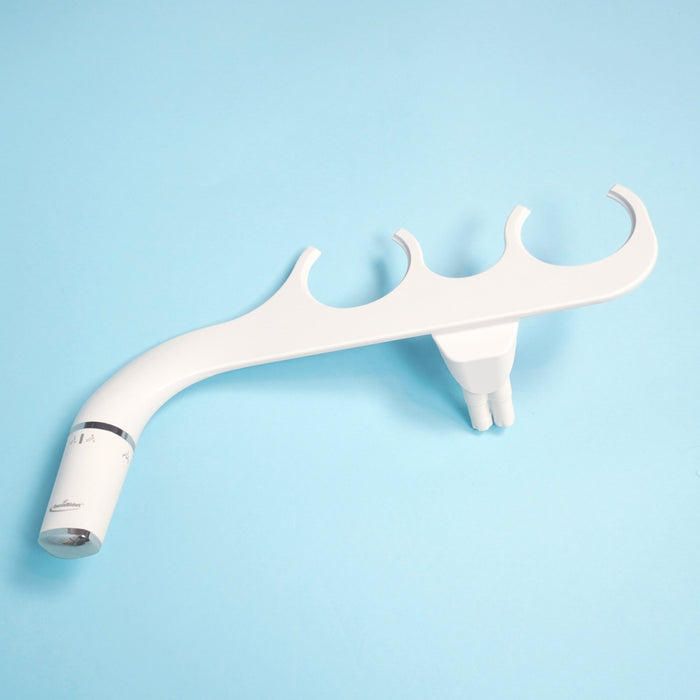
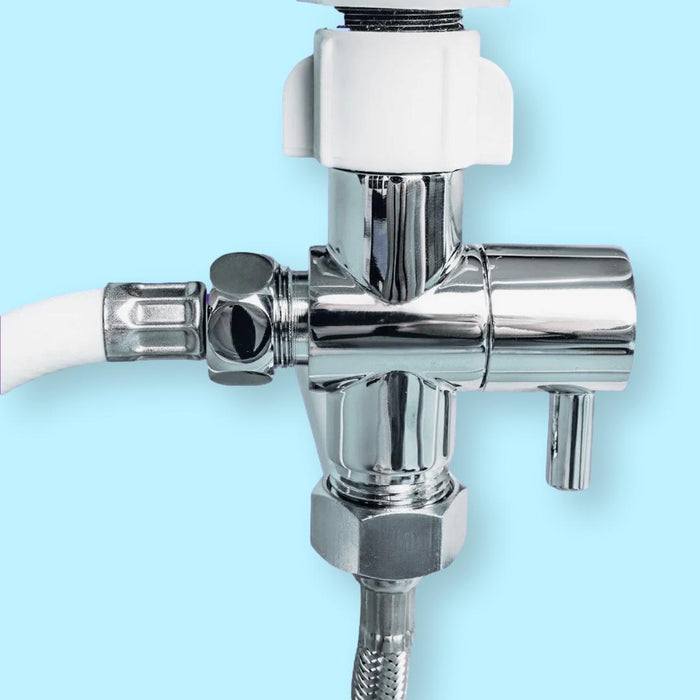
A non electric bidet built into the seat skips the hose entirely. The Classic GenieBidet seat replaces your current toilet seat and taps the cold supply line with an included T-connector, so there is nothing to plug in. Its dual self-cleaning nozzles extend for rear or front washing, and the spray is room-temperature water, not heated. The lid closes slowly, and the install takes about 20 minutes with basic tools.
Finland needed an ad campaign and a patent to change its habits. You need a free afternoon. See the Classic GenieBidet seat.