

· By David Olu
The Postpartum Bidet Case for C-Section Recovery
In 2024, 1,173,391 American babies were born through an incision in the abdomen, according to the CDC. That is about one birth in three, and most of the advice about a postpartum bidet or peri bottle quietly assumes the other two.
The C-section parent gets a different recovery, with different limits. It is worth looking at what those limits are, and where the bathroom fits in.
The Name Is Probably a Myth
Start with the word itself. Most people have heard that the cesarean section is named after Julius Caesar, supposedly born this way. The U.S. National Library of Medicine calls that unlikely. In ancient Rome, the operation was performed only when the mother was dead or dying. Caesar's mother, Aurelia, is reported to have lived long enough to hear of her son's invasion of Britain.
The NLM lists other possible roots. One is a Roman law requiring the procedure on women who died in childbirth. Another is the Latin verb meaning "to cut." Historians still cannot say for sure. The word "section" did not replace "operation" until after 1598, when Jacques Guillimeau used it in a book on midwifery.
For most of history, the surgery was a last resort meant to save the baby, not the mother. The NLM traces one of the first written reports of both surviving to Switzerland in 1500, when a pig gelder named Jacob Nufer operated on his own wife after days of failed labor. She reportedly went on to have five more children. Historians treat that story with caution, since it was written down 82 years later.
Today the surgery is routine. That does not make it small.
What Recovery Asks of Your Body
Cleveland Clinic describes a C-section as major surgery and says recovery takes about six weeks, though every timeline is different. Most people spend two to four days in the hospital first.
Once home, the guidance from Cleveland Clinic ob/gyn Dr. Erin Higgins is specific. Avoid lifting, twisting, or any movement that puts pressure on the incision. Do not lift anything heavier than your baby. Keep the incision clean and dry. Some people wear an abdominal binder, a wide compression band, to support the area and take stress off the stitches. Walking is encouraged. Lying in bed for two weeks is not.
There is one more detail many first-time parents do not expect. Vaginal bleeding still happens after a C-section. Cleveland Clinic says it is usually lighter than after a vaginal birth, but it can last four to six weeks, and the first few days are the heaviest.
So a C-section parent is often managing two things at once: a healing incision across the lower abdomen and weeks of postpartum bleeding. Both land in the bathroom several times a day.
The Awkward Math of the Toilet
Think through the motion most people use to wipe. You lean forward, reach behind or between, and rotate at the waist. That is a small twist, repeated many times a day, in the same core muscles Dr. Higgins describes as "pretty weak because of the incision."
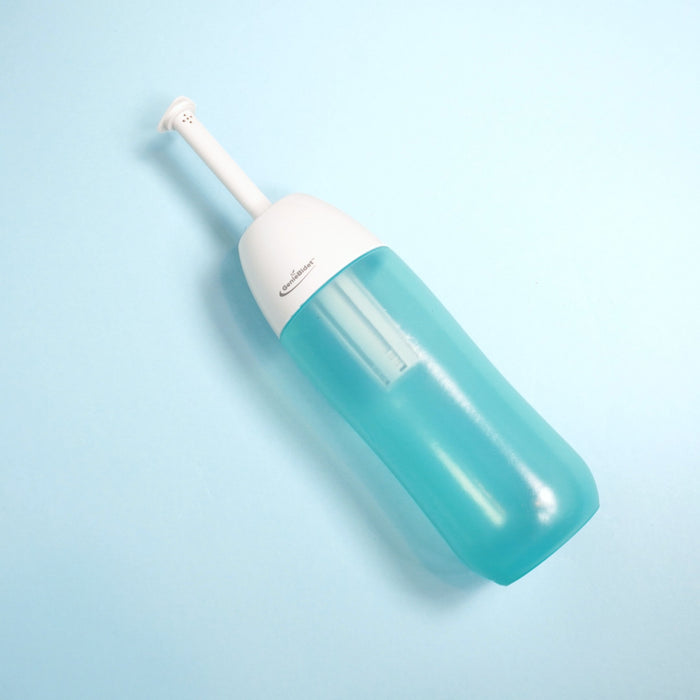
A handheld squeeze bottle of water, often called a peri bottle, rinses without friction. But it still has to be filled, aimed, and squeezed while seated, which asks for some reaching of its own.
None of this is a medical treatment. It is ergonomics. When your doctor tells you to avoid twisting and keep things clean, a setup that does the rinsing for you removes one repeated strain from your day.
This article is for general information only and is not medical advice. Talk with your doctor or midwife about your own recovery.
A Recovery Plan That Includes the Bathroom
New parents usually prepare a nursery, a diaper station, and a car seat. The bathroom rarely makes the list, even though it is the room a recovering parent visits most. If one in three births ends in surgery, a birth plan that covers the bathroom is not overthinking. It is planning for the odds.
The best time to set it up is before the due date, while bending under a toilet seat is still easy for someone in the house.
Where a Postpartum Bidet Fits
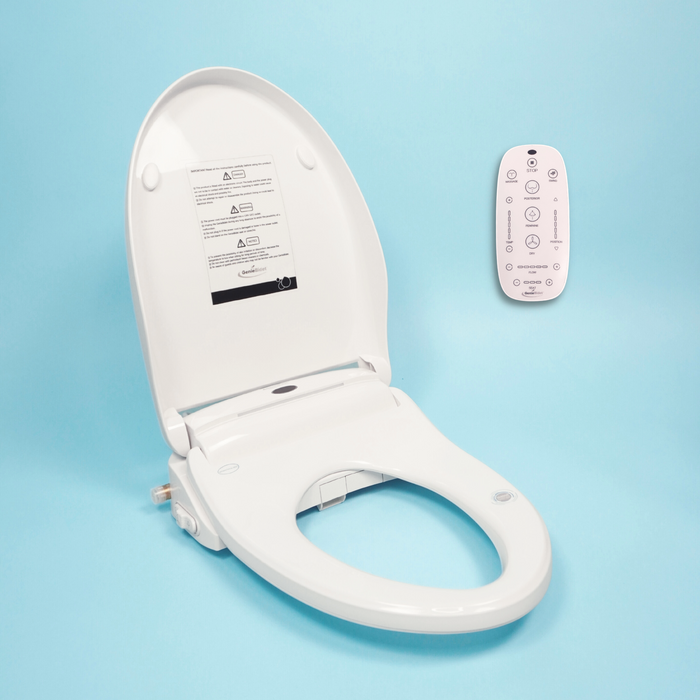
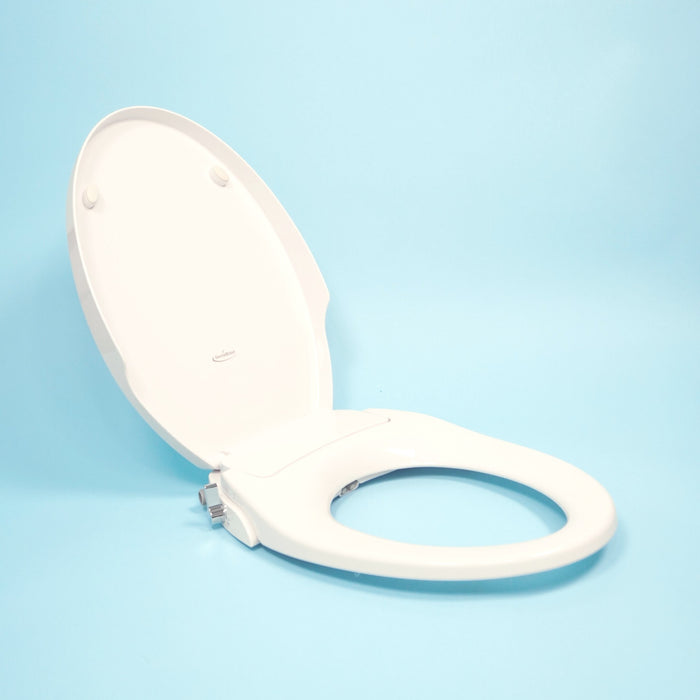
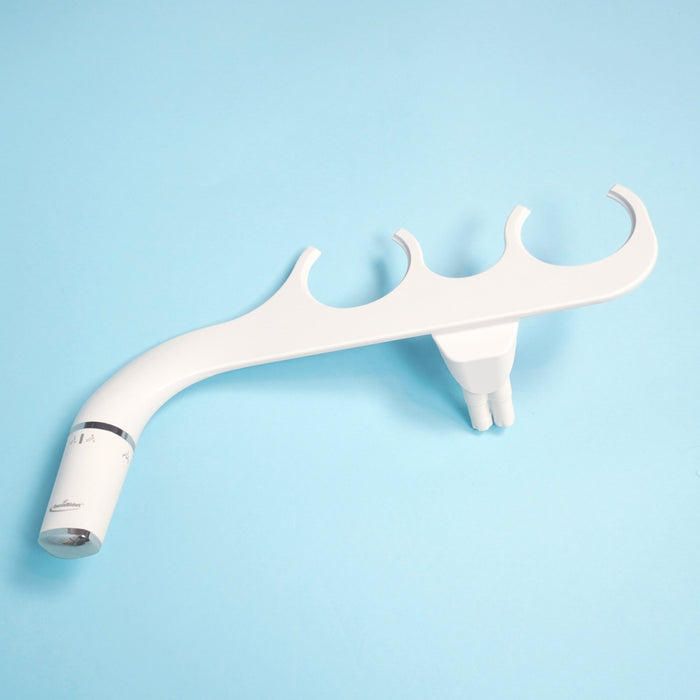
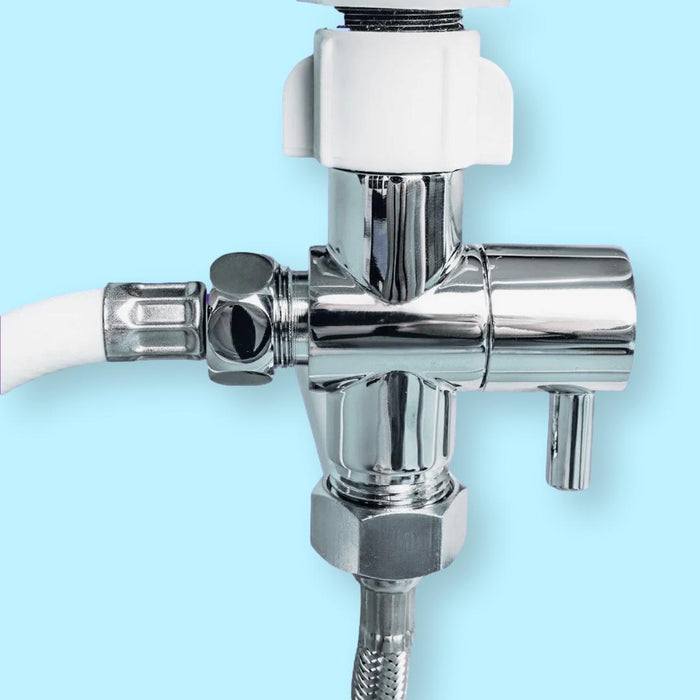
A postpartum bidet seat does the aiming for you. The GenieBidet Classic seat installs like a regular toilet seat and uses a lever to send a gentle stream of room-temperature water from your existing supply line. It is non-electric, so there is nothing to plug in. It has dual retractable self-cleaning nozzles, including a feminine wash setting that rinses the front, plus a slow-close lid. It also comes with a hybrid T-connector and a GenieBidet GO travel bottle for the days you are out of the house.
A partner or friend can put it in before the baby arrives, in about the time it takes to swap a toilet seat. See the GenieBidet Classic seat here.