

· By David Olu
A Berkeley Shock Lab Explains the Bidet for Apartment Life
Before 1961, a Berkeley engineering professor paid college students to grip live wires and hold on until they physically couldn't let go. His name was Charles Dalziel, and those experiments explain why your bathroom outlet sits by the sink, why it has two little buttons, and why the smartest bidet for apartment living never plugs into it at all.
It sounds like a strange chain of events. It is. But every link holds.
The Professor Who Measured the Moment of No Return
Dalziel taught electrical engineering at the University of California, Berkeley. He wanted to answer a grim, practical question: at what point does electric current stop being a jolt you can pull away from and start being a grip you can't escape?
That point has a name, the "let-go threshold." Past it, the muscles in your hand clamp shut on the wire, even while your brain is screaming at you to release it.
So Dalziel recruited volunteers. Students, short on cash and long on curiosity, lined up to take carefully controlled shocks while he turned the current up. According to a 2024 history published by the International Association of Electrical Inspectors, he found that men typically hit their let-go limit around 16 milliamperes, and women around 10.5. He did not test children. Instead, he used the adult numbers to work out how little current it would take to trap a toddler.
A milliampere is a tiny amount of electricity. A household outlet can push far more than that through a body in a fraction of a second. Dalziel's data made the danger exact, and exact numbers are what engineers need to build a fix.
A Switch That Trips Before Your Muscles Lock
In 1961, Dalziel presented his research on electric shock at a meeting of experts in Geneva, and he is credited with inventing the electronic ground-fault circuit interrupter that same year. You know it as the GFCI: the outlet with the "test" and "reset" buttons.
The idea is simple. Electricity should flow out of an outlet and back in equal amounts. If some of it leaks out along a different path, such as through a wet hand and into the floor, the device notices the mismatch and cuts the power. Today's standard household version, called Class A, trips when about 6 milliamperes go astray and holds steady below 4. That is well under the let-go numbers Dalziel recorded, which is the whole point. The switch acts before your muscles can lock.
How the Code Followed the Water
The National Electrical Code, the rulebook most US cities adopt for wiring, brought in GFCIs one wet room at a time. The 1968 edition required them for underwater pool lights. The 1971 edition added outdoor outlets and outlets near pools. Then came the room that matters here: starting with the 1975 code, bathroom outlets had to be GFCI-protected. Garages followed in 1978, and kitchens, basements, and laundry rooms came later.
The code also says where a bathroom outlet has to go. It requires at least one receptacle within 3 feet of the outer edge of each sink basin, on a wall beside the sink or on the vanity itself. The goal is to keep hair dryers and razors from stretching cords across a room full of water.
Notice what the rule never asks for: an outlet next to the toilet. The code was written for grooming at the sink, not for anything at the other end of the room. So in millions of homes, the only plug in the bathroom sits by the mirror, often several feet from the toilet, with a tub or a doorway in between.
The Turn: Look at Your Own Bathroom Wall
Go stand in your bathroom and find the outlet. If you live in an apartment, odds are it is beside the sink and nowhere near the tank.
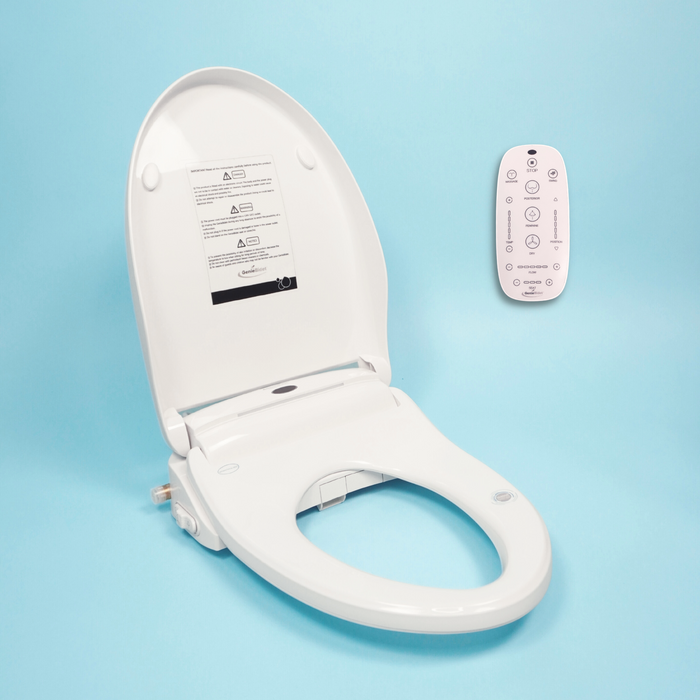
That small detail is why so many renters give up on bidets. An electric bidet seat needs power right at the toilet. That leaves three options. You can run a cord across the floor of the wettest room in the house, which is exactly the hazard Dalziel spent years measuring. You can ask a landlord to let an electrician open the wall and add a new circuit. Or you can quietly drop the idea.
Most renters drop the idea. The bathroom you rent is the bathroom you have, and the code sent its outlet to the sink fifty years ago.
The Bidet for Apartment Bathrooms That Skips the Outlet
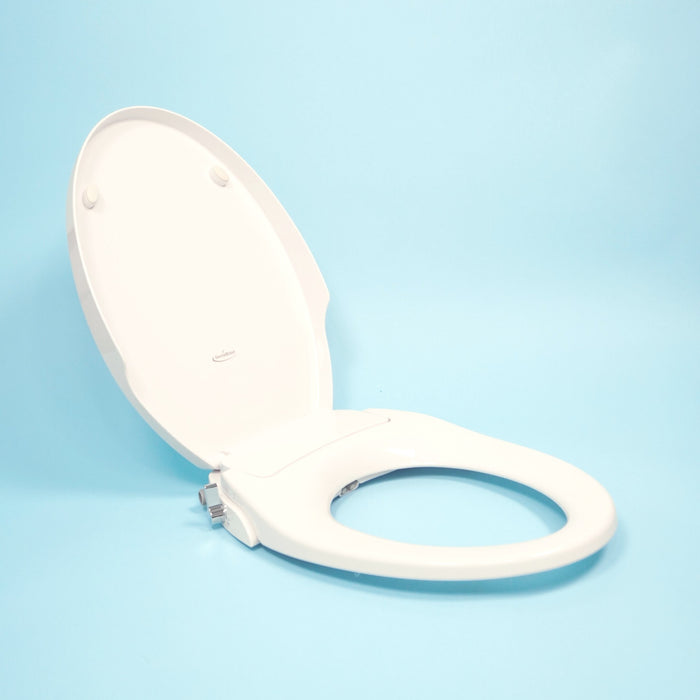
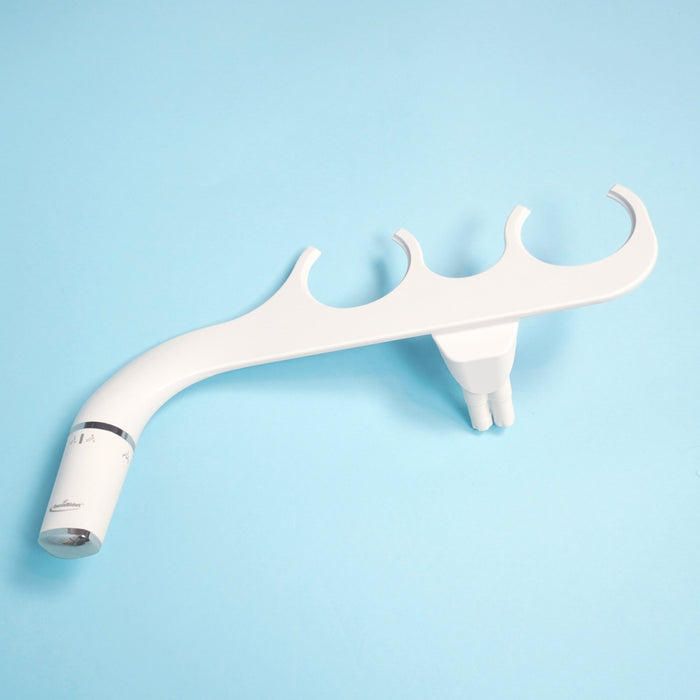
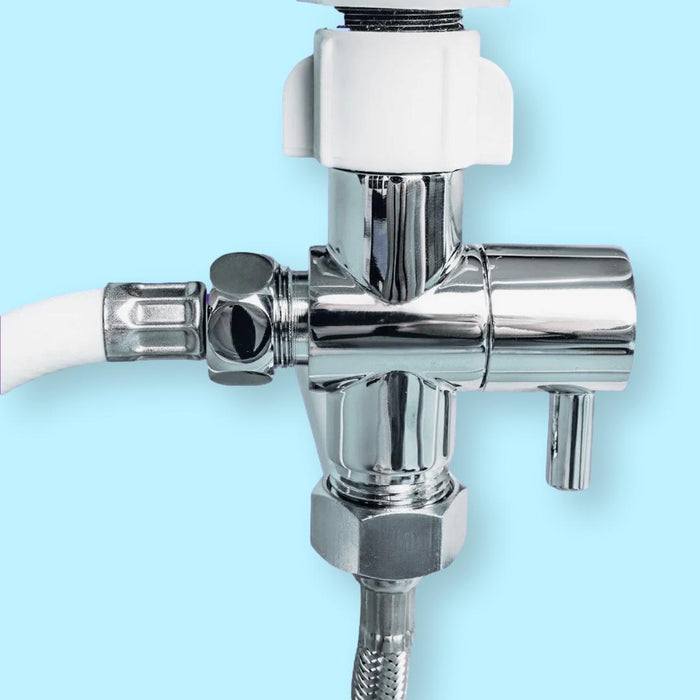
There is a fourth option, and it doesn't involve electricity at all. A non-electric bidet attachment runs on the water pressure already sitting in your toilet's supply line. It slides between the bowl and the seat, connects with a T-valve at the fill line, and works with a turn of a lever. No cord, no outlet, no electrician, and nothing to plug in near the water.
That makes it the most practical bidet for apartment living. The GenieClassic Bidet Attachment installs in about 15 minutes with basic tools, uses room-temperature water, and comes off cleanly when your lease ends. Professor Dalziel built a switch to make bathroom electricity safe. This simply leaves the electricity out.