

· By David Olu
There's a Forest in Your Bathroom — The Case for a Non-Electric Bidet Attachment
A single roll of toilet paper requires 37 gallons of water to manufacture. That's before it reaches your bathroom, before you flush it, and before the water treatment plant handles the aftermath. Switching to a non-electric bidet attachment won't fix the entire supply chain — but it does remove you from most of it.
The average American burns through 141 rolls a year. That works out to more than 5,200 gallons of manufacturing water per person, per year — just to wipe. Put another way: you're using roughly the same amount of water to produce your toilet paper as you'd need to fill a small above-ground swimming pool.
The Raw Material Problem
The numbers get starker when you trace where the paper comes from.
Most premium toilet paper sold in the United States is made from virgin pulp — freshly logged trees, not recycled fiber. And the source isn't a sustainable plantation somewhere in the American South. It's the Canadian boreal forest.
The Natural Resources Defense Council (NRDC) has tracked this supply chain for years. In their ongoing "Issue with Tissue" research, they found that the tissue industry clearcuts roughly one million acres of Canadian boreal forest every year to feed U.S. demand for toilet paper. Canada now ranks third in the world — behind only Russia and
Brazil — in intact forest loss, and a significant share of that loss is driven by American bathroom tissue.
The brands in most U.S. bathroom cabinets — Charmin, Angel Soft, Cottonelle, Quilted Northern — each scored F grades from the NRDC on their sustainability scorecard. The companies behind them, Procter & Gamble, Kimberly-Clark, and Georgia-Pacific, all rely heavily on virgin forest fiber rather than recycled alternatives.
Why Is It Always Virgin Pulp?
Recycled-fiber toilet paper exists and performs adequately. But American consumers have spent decades equating softness with quality, and recycled fiber produces a rougher sheet. So manufacturers compete on fluffiness, which demands long, strong fibers — the kind that come from old-growth boreal trees, not a recycled cardboard box.
The result is a strange market dynamic: the softer your toilet paper, the more likely a tree was standing in the Canadian wilderness a few months ago.
Globally, an estimated 27,000 trees are felled every single day for toilet paper production. The U.S. accounts for a disproportionate slice of that. With about 4% of the world's population, Americans consume roughly 20% of its toilet
paper — approximately three times more per person than most Europeans and nearly 100 times more than the average Chinese citizen.
The Emissions Side
Manufacturing water is only part of the picture. The NRDC estimates that logging in Canada's boreal forest releases 26.4 million metric tonnes of greenhouse gases per year — roughly a quarter of the combined annual emissions from every car and truck in the United States in 2019.
Toilet paper is also one of the few household products designed to be used once and flushed. After it leaves your hand, it enters the sewage system, travels to a treatment plant, and requires energy-intensive processing before the water can be released. The cardboard core and packaging go to landfill or, optimistically, into a bin.
Every step has a cost. None of them appear on the price tag.
The Outlier's Perspective
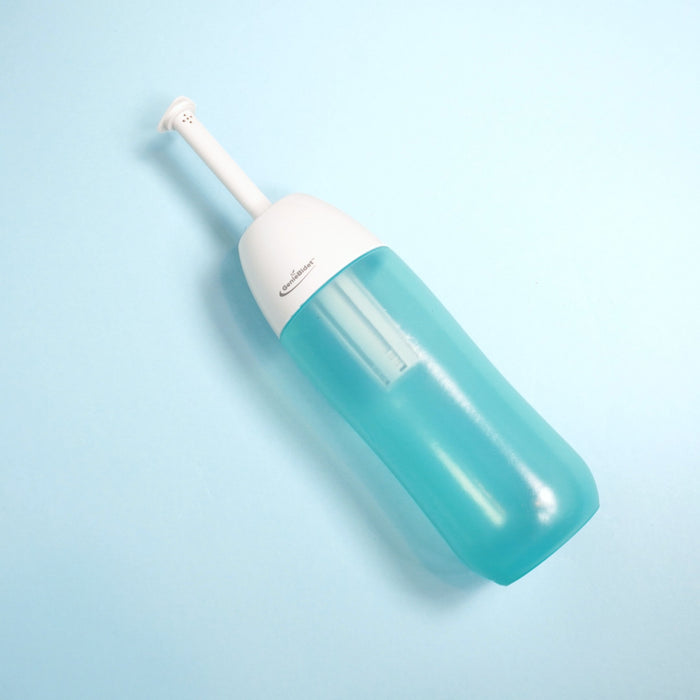
It's worth noting that most of the world doesn't do this. Large portions of South Asia, the Middle East, and East Asia use water to clean after using the toilet — via a handheld spray, a small pour-vessel, or a built-in spray function on the toilet itself. Japan's bidet adoption rate exceeds 80% of households. These practices use no virgin pulp, no manufacturing water, and produce no single-use waste in the bathroom. The U.S. is not the global norm. It's the exception.
The Turn
You're probably not going to switch to recycled toilet paper tomorrow. Habit is real, softness preferences are real,
and the bathroom cabinet isn't where most people pick environmental fights. But there's a smaller decision available — one that makes a meaningful dent without requiring any sacrifice in hygiene.
What a Non-Electric Bidet Attachment Actually Changes
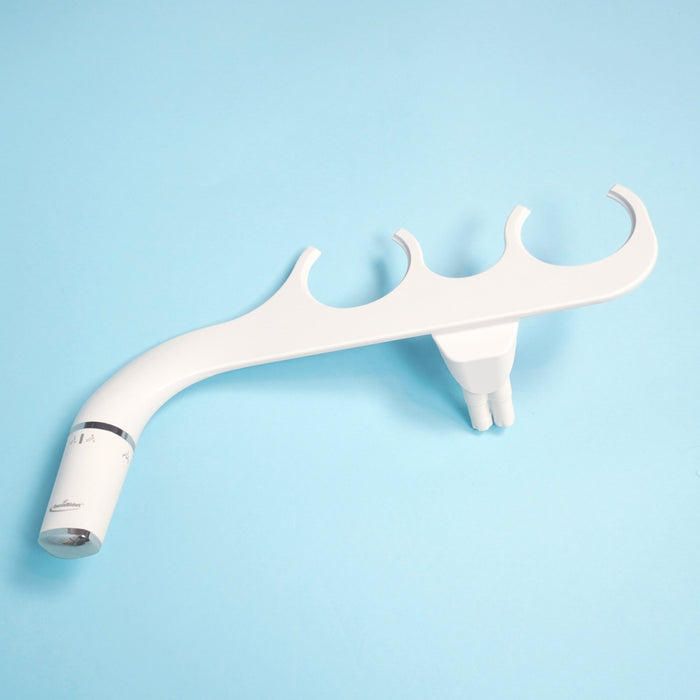
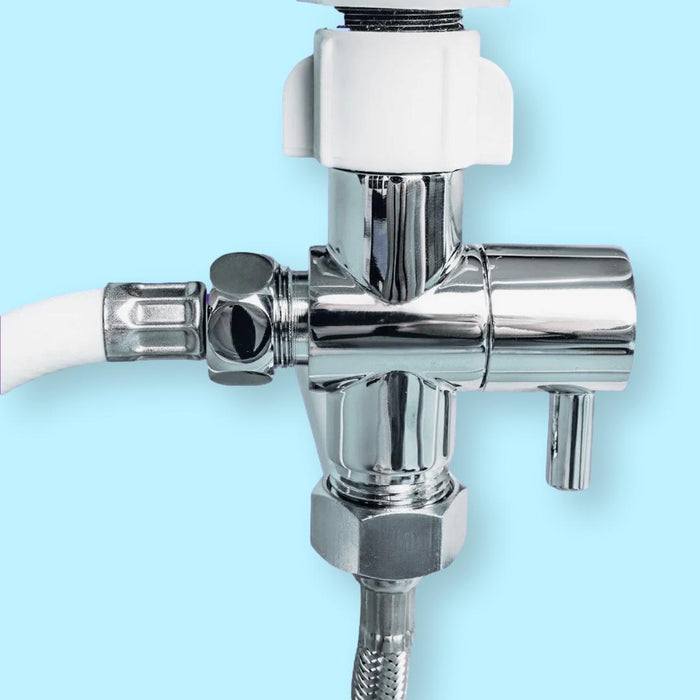
A non-electric bidet attachment connects directly to the cold water supply line behind your toilet. No electricity, no heating element, no new plumbing. It uses the water already running to your tank, at ambient room temperature, and
directs a targeted stream for cleaning after using the toilet.
You still use toilet paper — just far less of it. Instead of wiping, you wash and then use a small amount of paper to dry. The reduction in rolls per year is significant, and that reduction translates directly: fewer manufacturing gallons, fewer boreal acres, a smaller footprint from a room where the choice is easy.
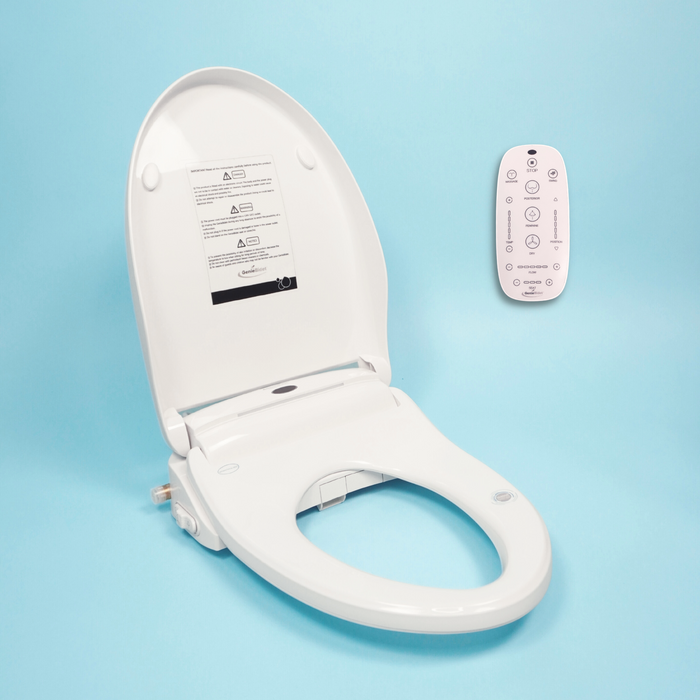
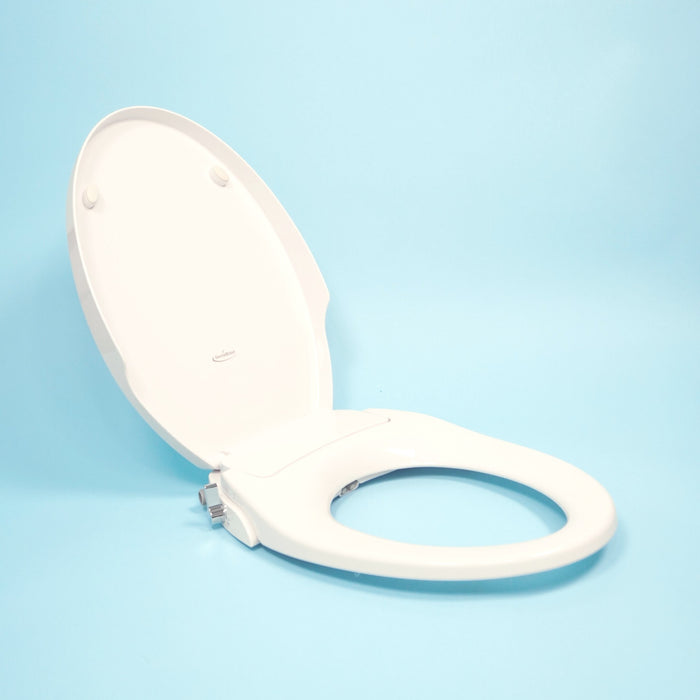
The GenieBidet attachment installs in about 15 minutes, fits any standard toilet, and requires no tools beyond what's already under your sink. No drilling, no landlord conversation, no electrician.
GenieBidet Toilet Attachment
The forest was never supposed to be in your bathroom.