


· By David Olu
The Real Cost of Toilet Paper — and What a Bidet Costs
The average American will spend roughly $11,000 on toilet paper over their lifetime. That's the price of a reliable used car, a semester of community college, or about 200 non-electric bidet attachments.
Most people have never run the bidet cost comparison. Let's do it now.
Building the Number
According to Statista, the average American uses about 140 rolls of toilet paper per year — more per person than any other country on Earth. At typical retail prices of $1 to $1.50 per roll for mid-grade brands, that comes to roughly $140 to $210 annually for a single person. A survey of 2,000 American adults conducted by Study Finds put the average at $182 per year.
Multiply $182 across a 65-year adult life and you land at $11,830. Study Finds' own lifetime projection came in at $11,198. The figures track closely regardless of methodology. For a household of four, the annual number crosses $600.
What 140 Rolls Means
That's a roll every 2.6 days — a consistent, unbroken supply-chain dependency. Most people don't think about it that way until the supply breaks.
The 2020 toilet paper shortage made the dependency vivid. Within days of pandemic panic buying, store shelves emptied in a way that hadn't happened in living memory. Part of the reason was structural: residential toilet paper and commercial/institutional toilet paper run on different supply chains. When consumers rushed to stock up and offices and restaurants shut down simultaneously, the logistics couldn't adapt quickly enough. Rolls sat in warehouse pallets for commercial accounts while grocery store shelves went bare.
That disruption — from a single unexpected event — came from relying entirely on a consumable that has no substitute in a paper-only bathroom.
The Hidden Costs Behind the Roll
The $182 figure only captures what comes out of your wallet. It doesn't count what goes into making the product.
NRDC research found that manufacturing a single roll of toilet paper requires approximately 37 gallons of water. At 140 rolls per year, that's roughly 5,180 gallons of manufacturing water — before any water used in the bathroom itself.
The forest cost is steeper. NRDC's "Issue with Tissue" reports document that the tissue industry clears approximately 1 million acres of Canadian boreal forest annually for virgin pulp. Major US brands — the ones that dominate supermarket shelves — source heavily from virgin wood fiber. Recycled-content alternatives exist but remain a small fraction of total sales. These costs don't appear on your receipt. They're paid elsewhere.
The Bidet Cost Comparison
A non-electric bidet attachment runs $50–$120 at the low to mid range of the market. A bidet toilet seat starts around $112.
The math from there is simple:
At $182 in annual toilet paper spending, a $52.99 attachment pays for itself in under four months — assuming near-complete paper replacement. Most users reduce usage by 75–80% rather than eliminating it entirely, which still means saving roughly $135–$145 per year after the first year.
Over ten years: roughly $1,400 in savings from one $53 purchase.
Over a lifetime: the bidet cost stays fixed. The toilet paper cost keeps compounding.
The "It's Just Toilet Paper" Tax
Part of what makes this spending so durable is behavioral. Toilet paper is what economists call an inelastic
good — people buy it regardless of price, don't comparison-shop aggressively, and rarely consider alternatives. It's also a purchase that happens in small increments: a pack here, a bulk box there, added to a cart alongside groceries. The annual total never appears as a single number anywhere. That invisibility is expensive. $182 doesn't feel like $182. It feels like individual, unremarkable trips to the store.
Who Benefits Most From Switching
The financial case for bidet adoption is strongest in a few specific situations.
Households with three or more people see annual toilet paper spending in the $400–$600 range. The payback period for a $53 bidet attachment shortens to weeks.
People on fixed or tight budgets who track grocery spend carefully can redirect $10–$15 per month consistently — which adds up to $120–$180 per year — with a single one-time purchase.
High-use individuals — people who wipe more frequently due to digestive conditions, hemorrhoids, or personal preference — consume significantly more than 140 rolls per year, making the savings proportionally larger.
Running the Numbers
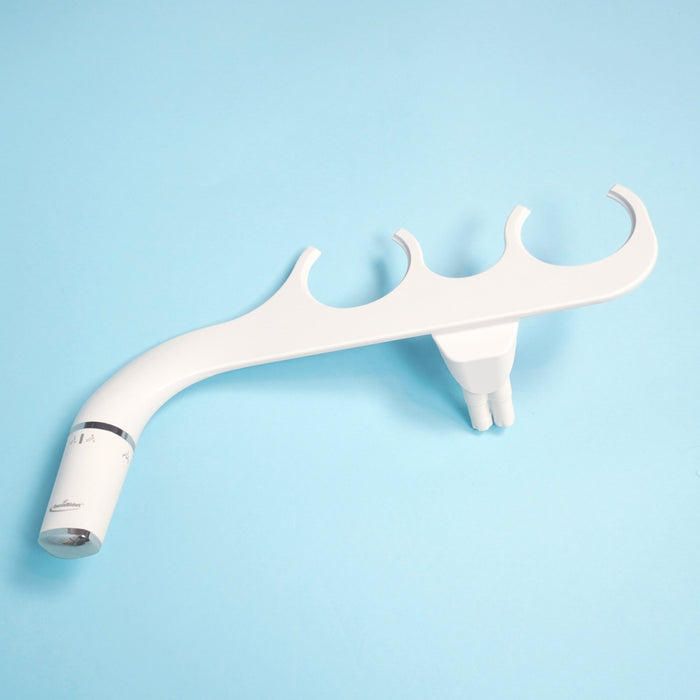
The GenieBidet attachment is a non-electric bidet that installs in about 15 minutes without a plumber orelectrician. At $52.99, no outlet, no wiring, ambient-temperature water, adjustable pressure, and it fits standard toilets.
Bidet cost: $52.99, once. Toilet paper cost: $182 per person, every year, for life