

· By David Olu
Who Invented the Bidet? Historians Can't Agree on His Name
The man usually credited with inventing the bidet has at least two different names in the historical record, no surviving portrait, and no confirmed birth year.
A Parisian Furniture Maker, Sometime Around 1710
Most bidet histories point to the same shadowy figure: a French furniture maker working in Paris in the early 1700s, hired by wealthy clients who wanted a faster way to clean up than a full bath. Some sources record his name as Christophe de Rosiers. Others record it as Cristofle Desormeaux. Three centuries of French spelling drift, combined with the fact that furniture makers rarely signed their work the way painters did, means nobody can say for certain which version is correct — or if they're the same man at all.
What is documented is the object itself: a shallow basin mounted on a low wooden stand with legs, kept in the bedroom next to the chamber pot, built for a single client at a time. It wasn't plumbing. It was furniture, custom-made, and expensive enough that only the aristocracy could afford one.
The name came from somewhere else entirely. In 1564, the French writer François Rabelais used the word "bidet" to describe a small, sturdy horse — the kind couriers rode because it could trot for hours without tiring. The word likely came from the Old French "bider," meaning "to trot." For the next 150 years, "bidet" meant nothing but a horse.
Then Parisian aristocrats started straddling a piece of hygiene furniture the same way they'd sit a small horse, and the name transferred. According to French language historian Alain Rey's Dictionnaire historique de la langue française, the plumbing fixture has carried the name "bidet" since 1739. The joke was blunt enough that it stuck for nearly 300 years.
A Design Category, Not a Novelty
Once the bidet caught on among the French elite, it didn't stay a one-off curiosity. Around 300 years ago, according to the Swiss National Museum, a whole category of specialized hygiene furniture began appearing in the bedrooms and boudoirs of the French aristocracy — marble-top washstands, close stools, and the bidet among them.
The Parisian designer Jean Charles Delafosse alone produced three distinct bidet furniture designs around 1770, evidence that by the late 18th century, workshops were treating the bidet as a serious furniture category worth iterating on, not a passing gimmick. A 1765 portrait by the Swiss painter Emanuel Handmann shows the same elaborate "morning toilette" ritual playing out in a boudoir in Bern, which tells you the trend had already crossed the border from France within a generation.
The bidet also carried a whiff of scandal from the start. The French painter Louis-Léopold Boilly, working between 1761 and 1845, placed a bidet at the center of an intimate domestic scene in his painting "La Toilette intime ou la Rose effeuillée." For much of its early history, the bidet sat somewhere between a hygiene fixture and an object polite society didn't discuss in mixed company — a reputation that, centuries later, is part of the reason it never fully caught on in the United States.
Your Bathroom Doesn't Need a Second Chair
Here's what's easy to miss about the 18th-century version: it required owning an entire second piece of furniture. A wealthy Parisian household needed floor space for a wash-stand, a chamber pot, and a separate bidet — three objects doing three separate jobs, none of them connected to plumbing.
Your bathroom doesn't work that way. You have one fixture — the toilet — and whatever gets added has to work with it, not next to it. That mismatch between the bidet's original form (custom furniture) and a modern American bathroom (one fixture, limited square footage) is a big part of why the idea took nearly 300 years to become a mainstream conversation in the U.S., long after it was routine in French and Italian homes.
The Modern Version Skips the Furniture
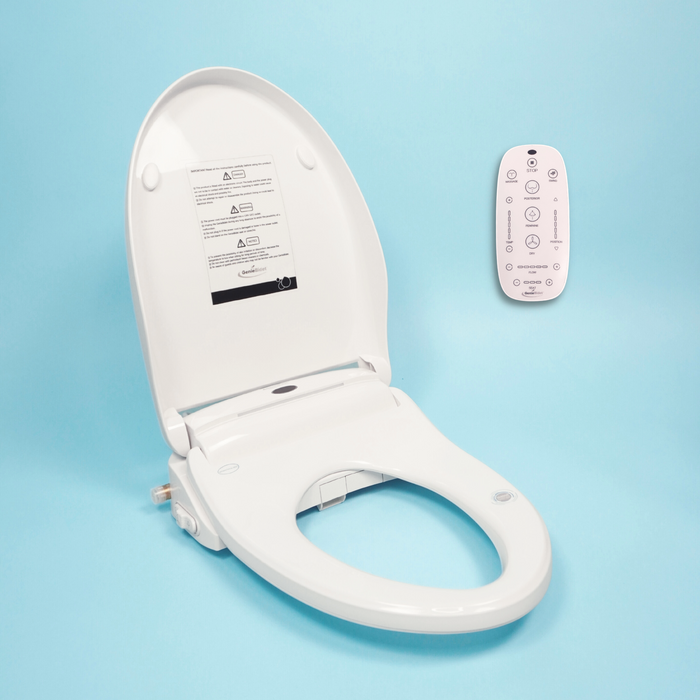
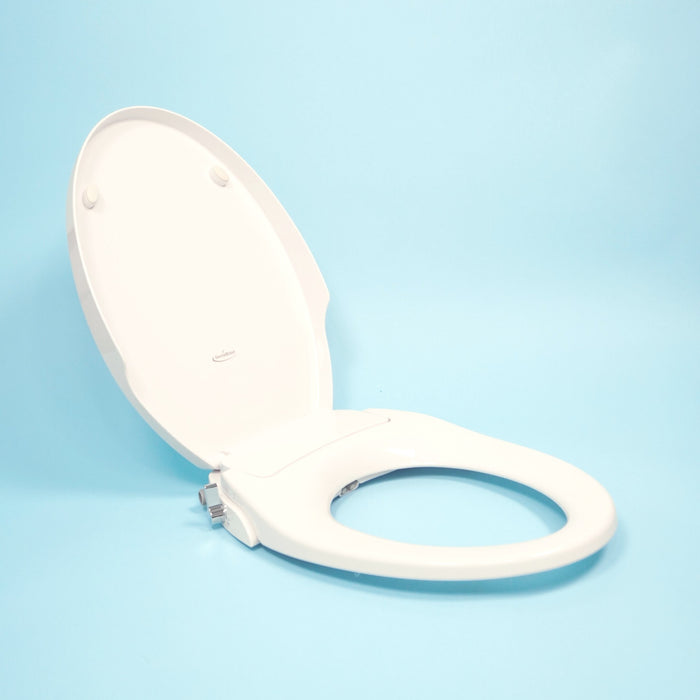
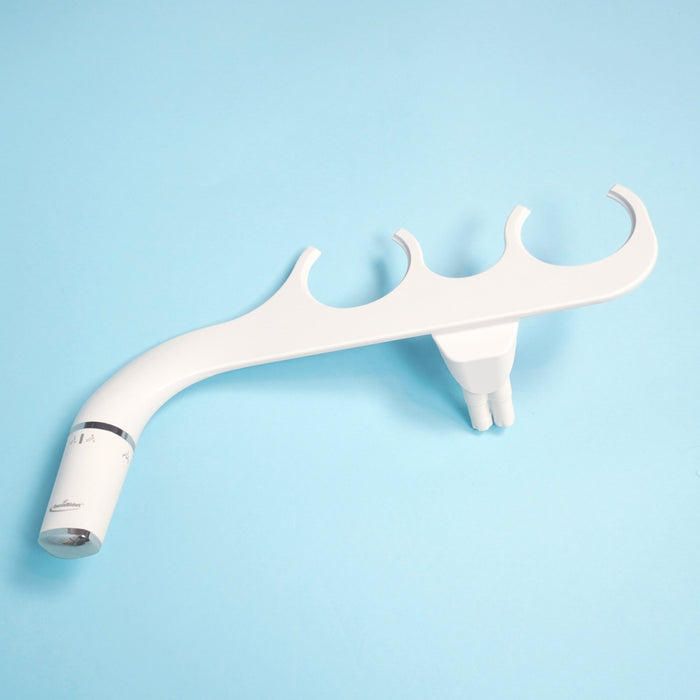
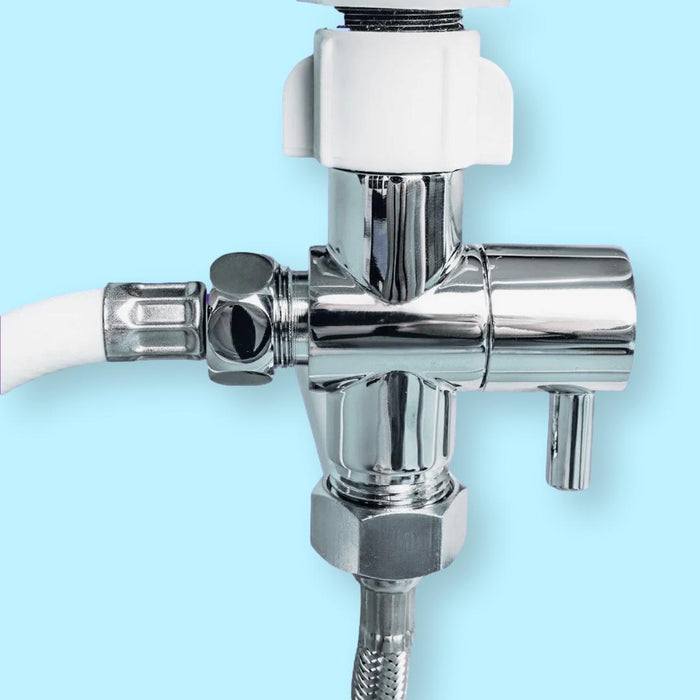
A non-electric bidet attachment solves the exact problem that made the original bidet a luxury item: it doesn't need its own piece of furniture, its own plumbing line, or its own room. GenieBidet's ultra-thin bidet attachment installs directly under your existing toilet seat in about 15 minutes, with no wiring and no electricity — just a mechanical connection to the water line already running to your toilet. The water stays at ambient room temperature, the same basic principle Christophe de Rosiers (or Cristofle Desormeaux) was working with three centuries ago, minus the custom woodworking and the dedicated floor space.
It's the same idea that stuck around long enough to survive a 300-year identity crisis over its own inventor's name. So if anyone ever asks you who invented the bidet, the honest answer is: nobody's entirely sure, but his idea outlived his own name by three centuries. You just don't need a second chair to use it.