

· By David Olu
The Bidet for Cloth Diapers Parents Already Use Daily
The word "diaper" shows up in print for the first time in a William Shakespeare play. It had nothing to do with babies — it was just the name of a type of woven linen fabric. The baby version came centuries later, and the mess-management problem that comes with it hasn't fundamentally changed since. Plenty of parents solve it today with a bidet for cloth diapers, even if nobody in the room calls it that.
For most of that history, the solution was simple: cloth, rinsed and reused. Elizabethan-era cloth was reportedly changed only every few days. By the early 1800s it was a folded square of linen or flannel, tied on. The safety pin, invented in 1849, made that easier to hold in place. Modern mass-produced cloth diapers arrived in 1887, and the plastic diaper cover showed up in 1946. Disposable diapers didn't hit the market until the early 1960s — which means for most of human history, "diaper" meant something you washed and used again, according to a history compiled by cloth diaper maker Kanga Care.
None of those older methods solved the actual mess problem so much as move it to laundry day. Whoever did the washing still had to get solid waste off the fabric before it went anywhere near a washtub or, later, a washing machine. That single unglamorous step barely changed for a century, even as the fabric, the fasteners, and the covers around it were redesigned again and again.
What disposables cost once they leave the house
Disposables won on convenience, and they won decisively. But the trade-off shows up in landfill data. The U.S. Environmental Protection Agency estimates that disposable diapers generated 4.1 million tons of waste in 2018 alone — about 1.4% of everything thrown away in the entire country that year. Of that, roughly 3.3 million tons went straight into landfills, up from an estimated 350,000 tons in 1970. The EPA's own data shows essentially none of it gets recycled or composted; diapers are built from wood pulp, plastic, and absorbent polymers designed specifically not to break down.
That math is part of why cloth diapering never fully went away, and why it's seen a real resurgence in recent decades as parents have looked for a lower-waste option. But cloth diapering has always had one unglamorous step that disposables skip entirely: getting solid waste off the diaper before it goes in the wash. For most of the 20th century, that meant holding a soiled cloth diaper over a toilet bowl and doing it by hand.
Cloth-diapering parents already have a name for the fix
That's not how it works anymore, at least not for parents who've found the tool for the job. In cloth-diapering circles, it's called a diaper sprayer: a hose-and-nozzle unit that clips onto the toilet's water supply and lets you rinse solid waste directly into the bowl with a spray of water, hands-free. It's become close to standard equipment in the cloth-diapering world for exactly the same reason bidets exist in the first place — water rinses; wiping and shaking just relocate the problem.
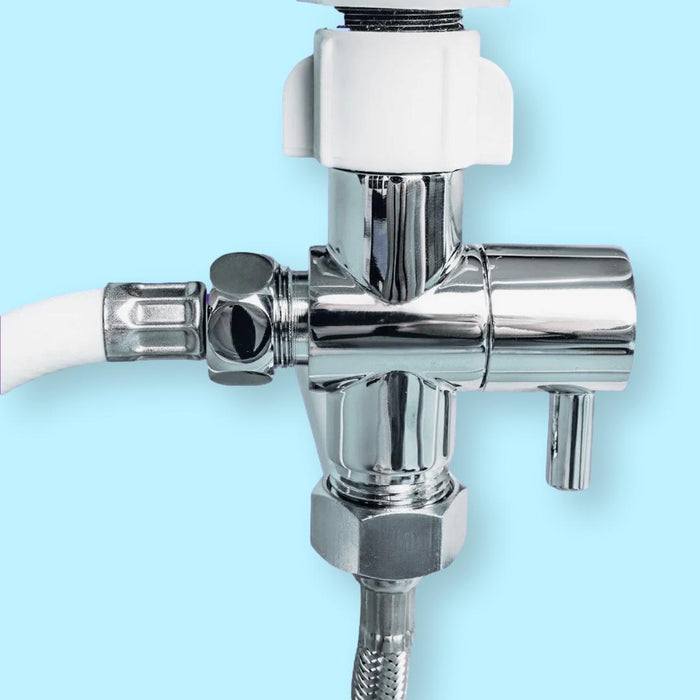
Strip away the baby-specific branding, and a diaper sprayer is functionally identical to a bidet attachment: a nozzle, a hose, a valve, connected to the water already running to your toilet. Cloth-diapering parents didn't invent a new category of hardware. They found a smart second use for hardware that already existed for adult hygiene, and named it for their own purposes.
Diaper sprayers usually sell as a standalone product: a coiled hose, a trigger nozzle, and a bracket that clamps to the toilet's water line, priced and marketed specifically to new parents shopping for cloth-diapering gear. The mechanism inside is the same low-pressure water valve used in any bidet attachment. The market simply split what is essentially one plumbing fixture into two products aimed at two different shoppers — a parent buying diapering gear, and an adult buying bathroom hygiene gear — even though the hose in each box does the same job the same way.
One fixture, two jobs
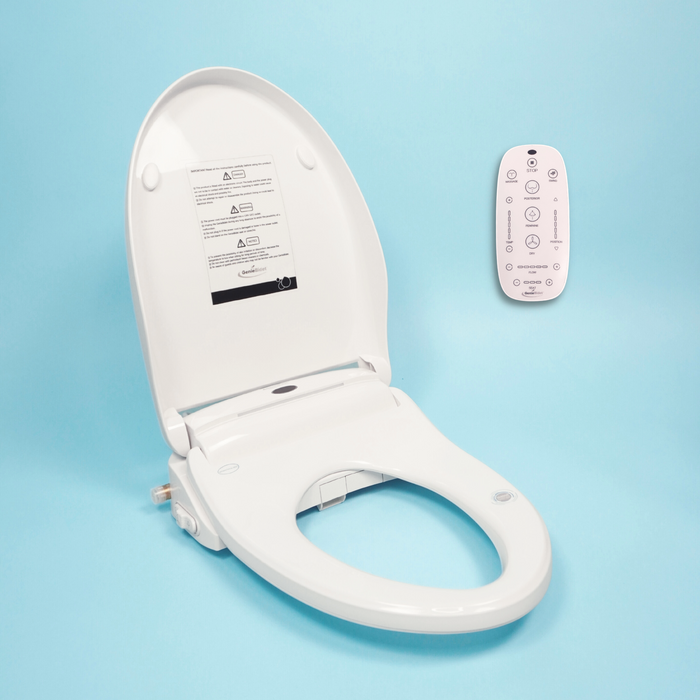
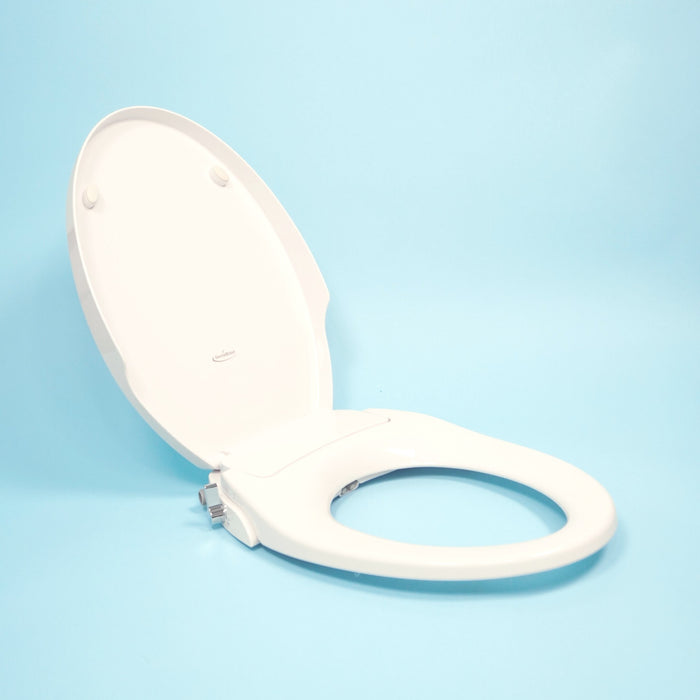
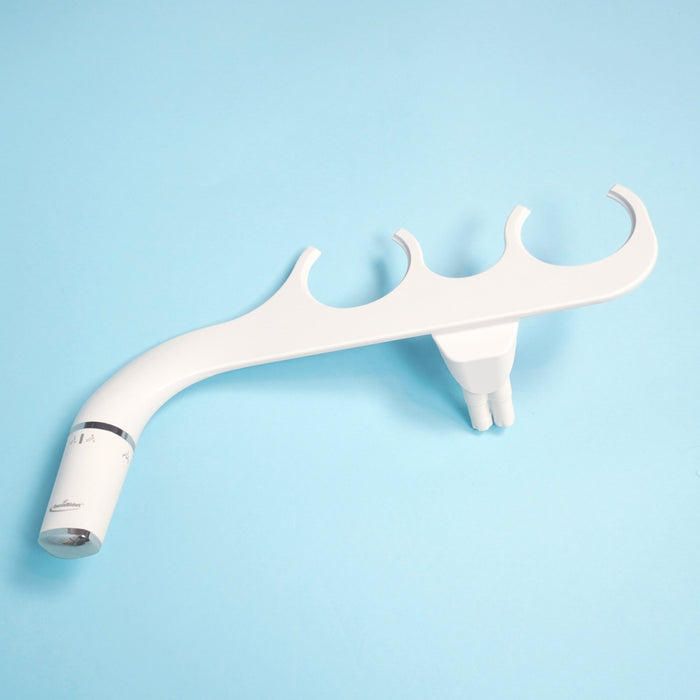
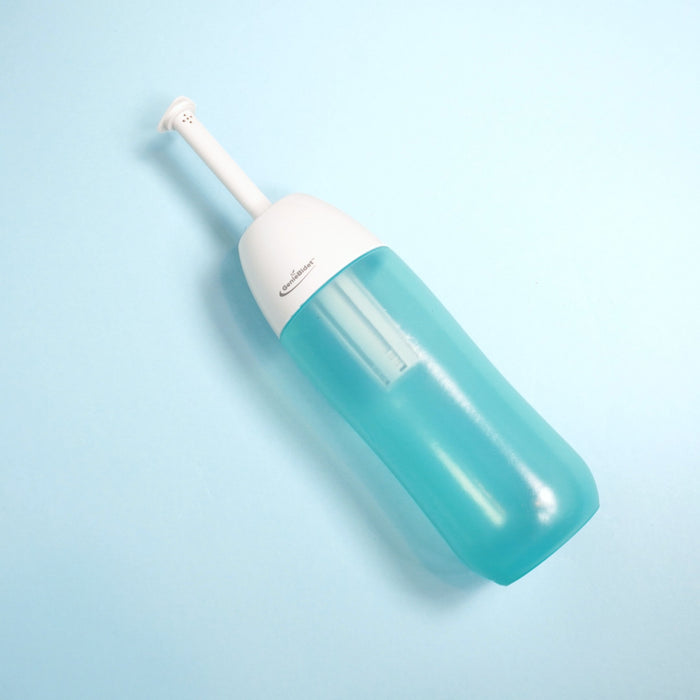
That overlap is worth pointing out plainly: a family bathroom that already has a bidet attachment installed doesn't need a separate diaper sprayer bought, shipped, and mounted as a second gadget. GenieBidet's bidet attachment fits under an existing toilet seat in about 15 minutes, no wiring required, with adjustable water pressure and a self-cleaning nozzle that works the same way whether it's cleaning a person or rinsing a cloth diaper over the bowl. The water runs at ambient, room temperature — there's no heating element and nothing electric to break down under regular use by a busy household.
For a family already weighing cloth diapers against the EPA's landfill numbers, that's one less specialty purchase to make, and one less thing mounted on the wall behind the toilet. The bidet for cloth diapers a parent might go looking for by that exact name is often just the household bidet attachment they could install once and use everywhere — for the diapers now, and for everyone else in the house once the diapering years are over. You can check the GenieBidet toilet attachment here and see whether it fits the toilet you're already rinsing diapers over.