

· By David Olu
The Dual Nozzle Bidet: A Case Built on 4 Centimeters
The female urethra is about 3 to 4 centimeters long — roughly the width of two fingers. That single measurement, published in the Cleveland Clinic's anatomy guides, explains one of the most misunderstood lines on any bidet spec sheet: the dual nozzle bidet. Two nozzles is not a luxury upgrade or a marketing flourish. It is a design answer to a distance problem that half the population lives with every day.
The four-centimeter problem
A urinary tract infection usually begins when bacteria reach the urethra and climb to the bladder. The shorter the climb, the easier the trip. The Cleveland Clinic puts the female urethra at about 3 to 4 centimeters, while the male urethra runs about 20 centimeters. That difference is the main reason UTIs are so lopsided by sex: more than half of women will experience at least one urinary tract infection in their lifetime.
The invader is rarely exotic. According to the Mayo Clinic, E. coli — an ordinary resident of the gut — is behind roughly 90 percent of urinary tract infections. Inside the intestine, E. coli is mostly harmless and even useful. The problem is purely one of location. A bacterium that belongs in one place ends up a few centimeters from a place it should never be.
Why direction became a hygiene rule
This is why one of the oldest pieces of bathroom advice is about direction. Mayo Clinic guidance tells women to wipe from front to back — moving away from the urethra, never toward it. The rule exists because gut bacteria only need a short ride to cause trouble, and a careless wipe is a ride.
Now look at a bidet through that lens. A wash nozzle is doing the same job a hand does: delivering cleaning to a specific spot, from a specific direction. Position and angle stop being comfort details. They become the whole point.
One nozzle, one compromise
A single-nozzle bidet is tuned for one target — rear cleaning. Its resting position and spray angle are set for that job. Ask that same nozzle to handle feminine washing and you get a compromise: either the user shifts around trying to redirect a stream that was aimed somewhere else, or the stream approaches from an angle the front-to-back rule was written to avoid.
A dual nozzle design refuses the compromise. One nozzle sits positioned and angled for rear wash. A second, separate nozzle sits farther forward, angled for feminine wash, so the water arrives where it should and travels the direction it should. Each nozzle does one job from the correct position, the way a kitchen keeps separate cutting boards for chicken and vegetables — not because one board can't physically do both, but because the whole point is keeping things apart.
Good designs also rinse the nozzles themselves before and after each use and retract them behind a guard when idle, so the hardware stays out of the mess it exists to clean. Retraction matters for the same reason the second nozzle does: it is a physical barrier between categories, built in metal and plastic instead of habit and memory. A rule you have to remember can be forgotten on a groggy morning. A nozzle that parks itself behind a shield cannot.
There is one more advantage that rarely makes the spec sheet. A nozzle aimed correctly needs less water pressure to clean well, because none of the stream is wasted on a bad approach angle. Two well-aimed gentle streams beat one strong misdirected one — a useful thing to know if the phrase "water pressure" makes you nervous.
The spec-sheet line that suddenly matters
Here is the turn for your own bathroom: shopping for a bidet, you will see "dual nozzle" listed flatly between hose length and valve type, as if it were trivia. Put a ruler next to it. Four centimeters is why the second nozzle exists, and why the anatomy that makes UTIs common is the same anatomy that makes nozzle placement worth caring about.
Two nozzles, zero watts
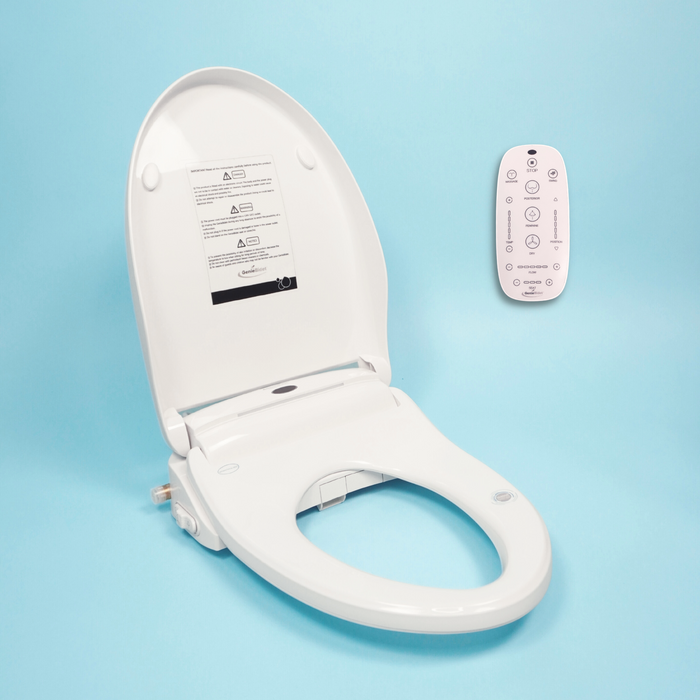
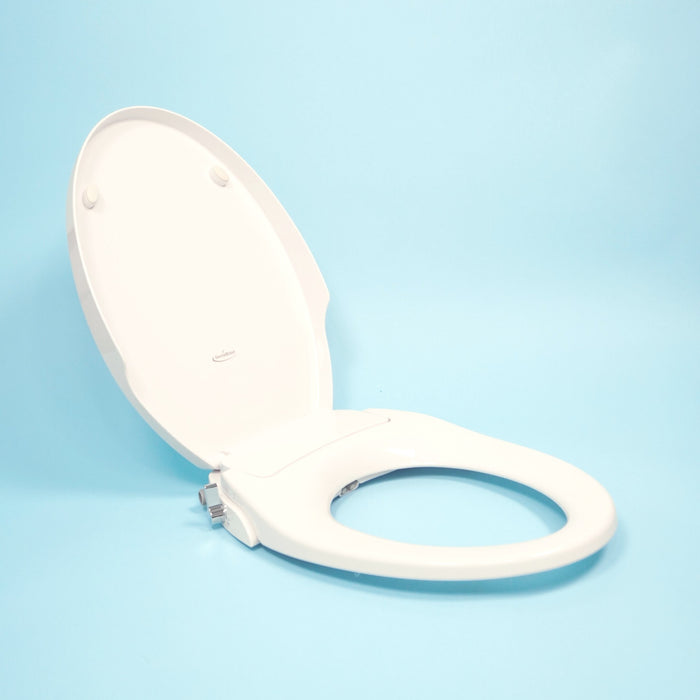
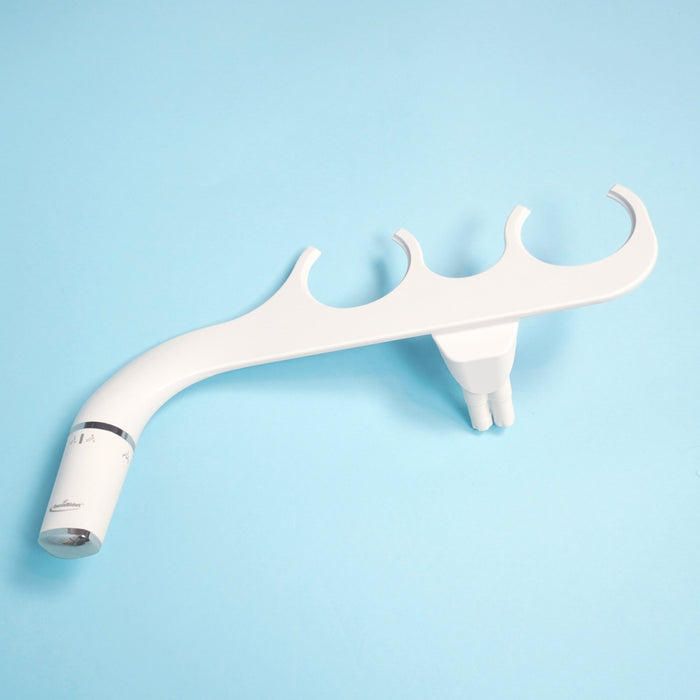
None of this requires electronics. The GenieBidet attachment is a dual nozzle bidet that runs entirely on your home's ordinary water pressure — two self-cleaning retractable nozzles, one for rear wash and one set forward for feminine wash, with adjustable pressure on a simple mechanical dial. No outlet, no wiring, ambient-temperature water, and a 15-minute install on a standard toilet. The engineering case was written by anatomy a long time ago; the hardware just finally caught up.
This article is for general information only and is not medical advice. For concerns about UTIs or personal health, talk to a healthcare provider.