

· By David Olu
Is It Weird to Use a Bidet? Herodotus Heard That One Too
Around 440 BC, the Greek historian Herodotus toured Egypt and reported, with visible bafflement, that Egyptians ate their meals outdoors in the street but relieved themselves indoors, in private — the exact reverse of respectable Greek practice. So before you ask whether it is weird to use a bidet, know that people have been calling each other's bathroom habits weird for about 2,500 years. The judges keep changing. The verdicts never hold up.
The first recorded case of bathroom culture shock
Herodotus devoted much of Book II of his Histories to cataloging the ways Egypt seemed upside-down to a Greek: women went to market while men stayed home weaving, and bodily functions happened indoors while eating happened outside. The Egyptian reasoning, as he recorded it, was tidy: necessary but unseemly things should be done in secret, and unembarrassing things done openly.
Here is the detail that ruins the joke for anyone hoping to laugh at the Egyptians: they were, by Herodotus's own account, obsessive about cleanliness. He describes priests who shaved their bodies every other day and bathed multiple times a day and night, and ordinary Egyptians who drank from bronze cups scoured daily. The people the Greeks found strangest were among the most fastidious in the ancient world.
Notice what is missing from the dispute: hygiene. Neither side was dirtier. Each simply sorted public and private differently, and each found the other's sorting bizarre.
"Dirt is matter out of place"
It took an anthropologist to explain what Herodotus was witnessing. In her 1966 book Purity and Danger, Mary Douglas argued that dirt is best understood as "matter out of place." Soil in the garden is fine; soil on the dinner table is filth. Shoes are respectable on the street and offensive on a pillow. What a culture calls disgusting is less about germs and more about which categories it refuses to let touch.
Bathroom norms are category systems, and every culture draws the lines in its own ink. That is why your gut can insist something is gross while the rest of the world shrugs.
Japan sorts by slipper
Japan draws the lines with footwear. Homes have a genkan — a lowered entryway where outdoor shoes are removed so street dirt never crosses into living space. Inside, house slippers take over. But at the toilet room door, house slippers stop, and a separate pair of toilet slippers waits just inside. They exist to keep even the floor of the toilet room in its own category, and wandering back to the dinner table still wearing them is a legendary guest blunder.
That same category-minded country made washing with water the household default. By a March 2018 Cabinet Office survey, 80.2 percent of Japanese households of two or more people owned a toilet seat with a wash function — a fixture so ordinary there that encountering a bathroom without one feels like a step backward in time. Across South Asia and the Middle East, water has been the standard for centuries — the lota, the shattaf — with dry paper alone considered the strange, half-finished option.
Line those maps up and the arithmetic gets uncomfortable for the American bathroom: measured by population, cleaning with water is not the quirky alternative. Paper-only is the regional custom.
The question answers itself
So: is it weird to use a bidet? "Weird" turns out to be a map coordinate, not a hygiene measurement. An Athenian found Egyptian privacy weird. A Japanese guest finds your single pair of bathroom-to-kitchen slippers weird. Most of the world finds a paper-only bathroom weird. Your discomfort with the idea of washing is not evidence about washing. It is evidence about where you grew up — Mary Douglas could have told you which category water fell into the moment you were born, just by looking at your address.
Redrawing one small border
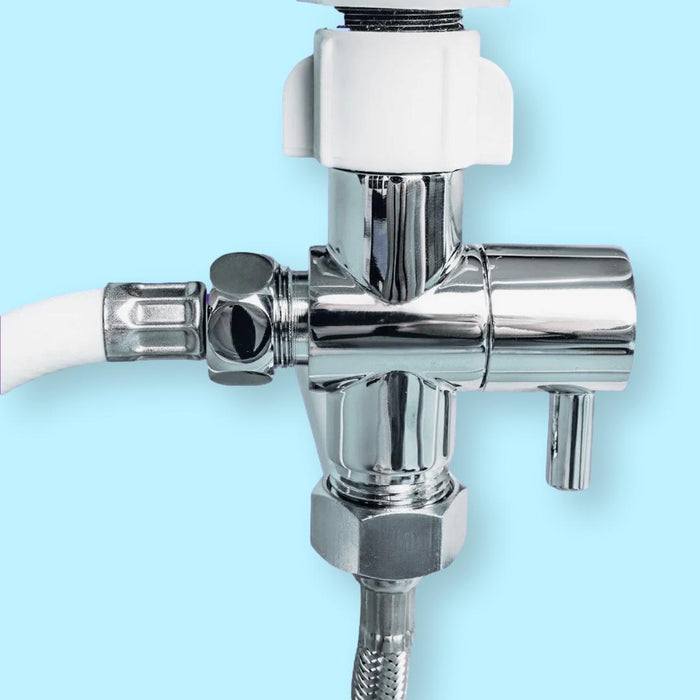
The border between "normal" and "weird" moves one bathroom at a time. The Classic GenieBidet seat makes the crossing quietly: it replaces your existing toilet seat, installs the same way, and washes with a stream of ambient-temperature water using your home's own water pressure — no outlet, no wiring, nothing electronic to explain to houseguests. From the outside it reads as an ordinary seat. From the inside, you have simply joined the larger half of the map.