

· By David Olu
Bidet Hand Hygiene: What a 2022 Study Found on Your Hands
Thirty-two nursing students wore double gloves to the bathroom for a 2022 study — and the outer glove told researchers exactly how much bacteria toilet paper leaves on your hands.
The Study Behind the Number
Researchers examined microbial contamination on the hands of 32 nursing students after defecation, comparing bidet toilet use against wiping with toilet paper alone, and published the results in the journal Biocontrol Science in 2022. Participants wore double gloves on their dominant hand. For the toilet-paper condition, they used four layers of toilet paper to wipe. Researchers then cultured bacteria from the outer glove to measure exactly what had transferred to the hand during the process.
The result: people who used a bidet had roughly seven to ten times fewer bacteria on their hands than people who relied on toilet paper alone. That's not a rounding difference — it's close to an order of magnitude, measured under controlled conditions rather than estimated.
The finding lines up with what microbiologists have said for years about paper as a barrier. Andreas Voss, professor of medical microbiology and infection prevention at UMC Groningen, has pushed back on the common assumption that toilet paper seals bacteria away from your skin. After using toilet paper, he's noted, there's a good chance microorganisms are still on your hands. Stéphanie Breukink, a colorectal surgeon at Maastricht UMC, put it more bluntly: wiping with toilet paper might look clean at a glance, but it isn't clean at the microscopic level. Rinsing with water, she says, gets you measurably cleaner than wiping with paper does.
Paper Was Never Built to Be a Barrier
This isn't a new suspicion — it's been demonstrated before. In an earlier study by food microbiologist Dr. John Brooks, researchers had participants wipe using six sheets of two-ply toilet tissue, then pressed their fingers onto culture plates. The finger impressions grew bacterial colonies with a distinct green metallic sheen, a signature of E. coli. Brooks's conclusion was direct: toilet paper, regardless of thickness or added lotions, doesn't act as a physical barrier against bacterial transfer. Microorganisms can pass through four layers of folded tissue without much resistance.
None of this means dry paper is dangerous in the way a contaminated food surface might be. Healthy immune systems handle low-level bacterial exposure routinely, and washing your hands with soap afterward removes the vast majority of what's transferred. But the data is consistent across two separate studies, run years apart, using different methods: wiping puts more on your hands than most people assume, and rinsing with water puts less there in the first place.
The Gap Happens Before You Reach the Sink
Here's the part that's easy to miss: the bacteria measured in both studies existed on the hand before anyone touched a faucet. That's the window that matters. Between finishing in the stall and reaching the sink, your hand touches a stall latch, a door handle, a phone pulled out of a pocket, a light switch. Handwashing afterward is still the single most effective step you can take — the CDC is unambiguous about that — but it's cleaning up a mess that a wash-based method never created in the first place.
That's the actual gap between wiping and rinsing. It's not about whether you wash your hands afterward. It's about how much is on them when you do.
Rinsing Doesn't Require Rebuilding Your Bathroom
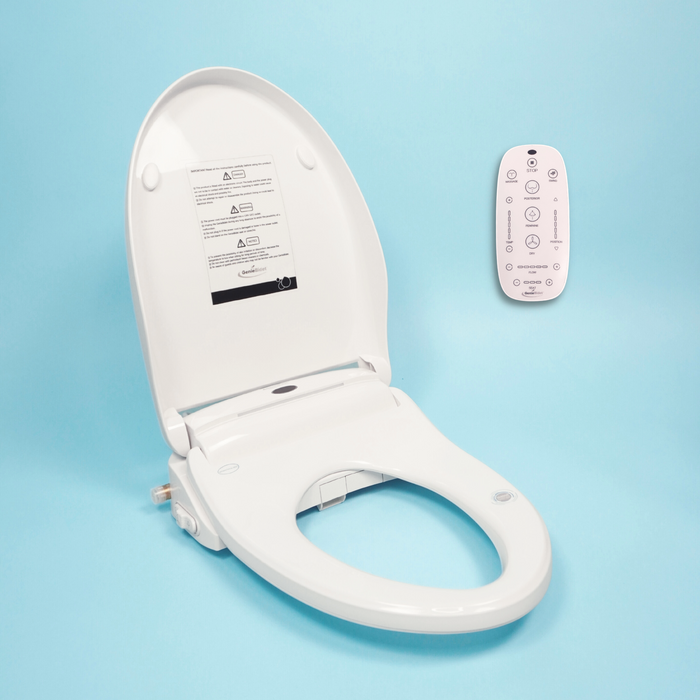
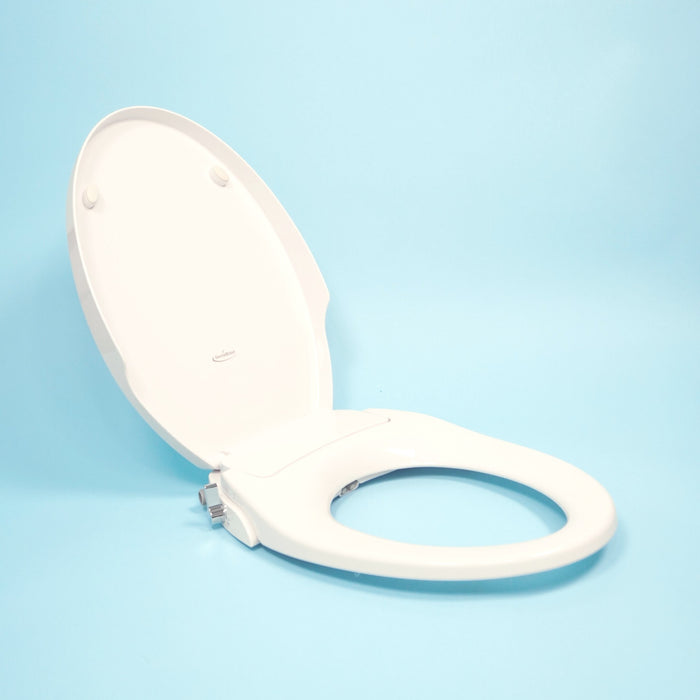
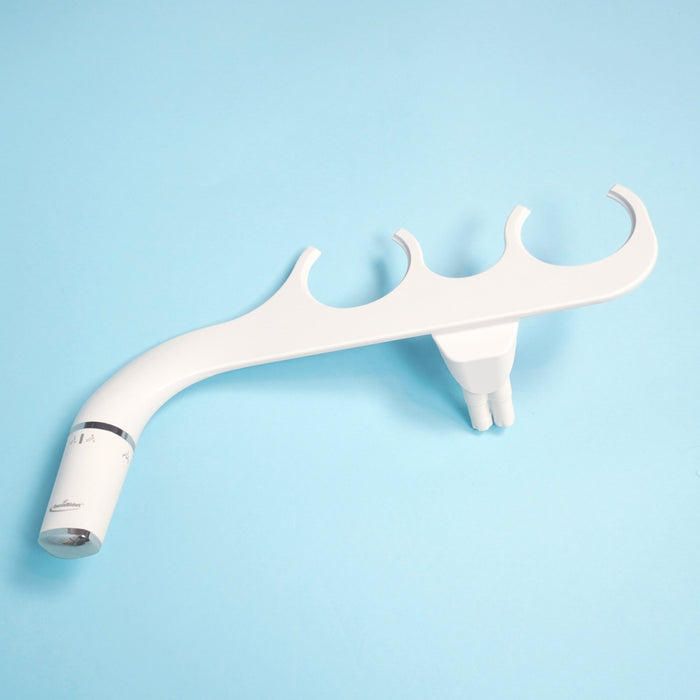
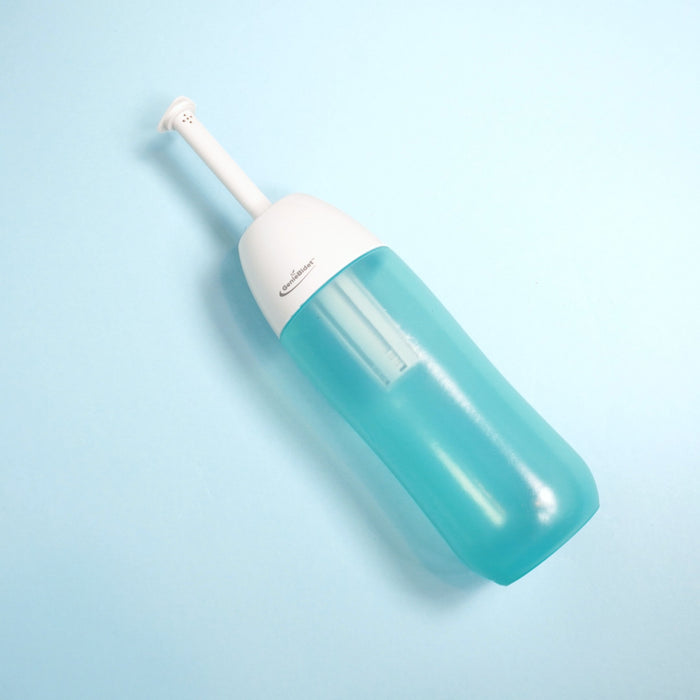
Closing that gap doesn't mean installing an electric washlet or rewiring your bathroom. A non-electric bidet attachment does the same basic job the Sanyo-Onoda City University researchers were measuring — replacing or reducing dry wiping with a stream of water — without a power outlet, a control panel, or a heated seat. GenieBidet's ultra-thin bidet attachment installs under your existing toilet seat in about 15 minutes, uses ambient room-temperature water from the line already running to your toilet, and includes adjustable, self-cleaning nozzles for both rear and feminine wash.
It won't turn your bathroom into a lab. But the same basic mechanism that produced a seven-to-tenfold drop in hand contamination in that 2022 study — water instead of dry paper — is exactly what it's built to deliver. Good bidet hand hygiene doesn't start at the sink. It starts one step earlier, and that's the step a simple attachment changes.