

· By David Olu
How One Ad Campaign Buried the Toilet Paper Alternative
For 21 years, one man appeared in over 500 television commercials with a single job: stopping women from squeezing a roll of toilet paper. Long before anyone typed "toilet paper alternative" into a search bar, this campaign was working overtime to make sure the question never came up.
His name was Mr. Whipple. He was played by character actor Dick Wilson, and from 1964 to 1985 he scolded supermarket shoppers in Charmin commercial after Charmin commercial with the line "Please don't squeeze the Charmin!" — usually right before getting caught squeezing it himself. The character and the catchphrase were dreamed up by ad man John Chervokas at the agency Benton & Bowles. Decades later, Advertising Age ranked the campaign among the top 100 advertising campaigns of the entire 20th century.
The most famous face in America was a grocer who didn't exist
It's easy to underestimate how deep Mr. Whipple got into American culture. A 1978 Procter & Gamble survey found he was the third best-known American in the country — behind only President Richard Nixon and evangelist Billy Graham. Ahead of actual celebrities. Ahead of most politicians who ever lived. A fictional grocery store manager, invented to sell tissue, out-recognized nearly everyone alive.
The campaign spilled into music more than once. In 1967, country singer Charlie Walker scored a Top 10 hit called "Don't Squeeze My Sharmon," directly inspired by the ads. Nearly two decades later, "Weird Al" Yankovic name-checked Whipple in his 1985 song "Dare to Be Stupid." The joke worked because everyone already knew the reference — Whipple wasn't just an ad character, he was a shared cultural touchstone that Procter & Gamble had spent two decades and hundreds of commercials building.
What Whipple was really selling, underneath the jokes, was an idea: that the whole point of bathroom hygiene was softness you could squeeze-test on a shelf. Not effectiveness. Not cleanliness. Softness, as a consumer virtue, marketed relentlessly for 21 years to a country that was otherwise not thinking hard about what happens after you use the product.
The campaign kept mutating to stay relevant. In the late 1970s and early 1980s, a rival grocer named Mr. Hoffmeier showed up in competing Charmin spots, openly encouraging shoppers to squeeze the rolls, and mocking Whipple for doing the same thing in private. By the late 1980s, Whipple himself had flipped his pitch, chasing down skeptical shoppers and practically begging them to squeeze the product he'd spent two decades forbidding. Even the ad campaign's internal logic bent around one fixed idea: the softness test was the whole conversation.
Meanwhile, most of the world was doing this differently
While Whipple was building a toilet-paper monoculture in American supermarkets, water-based cleaning was already standard in huge parts of the world. Bidets were common household fixtures across Italy, Portugal, Spain, France, and Turkey, widely used through East Asia, and standard in much of the Middle East and North Africa. American troops overseas and American tourists kept encountering the fixture and not knowing what to do with it — a confusion that outlasted Whipple himself, showing up in pop culture references for decades.
Dick Wilson died on November 19, 2007, at age 91. Just nine days later, Charmin ran a new commercial paying tribute to him using old clips. Procter & Gamble had given Wilson a lifetime achievement award back in 2000, even as the company was already easing in a new mascot family, the Charmin Bears, to carry the brand forward. But Whipple's basic pitch had already done its job over those 21 years. Generations of American shoppers had been trained to think of bathroom hygiene as a paper problem with a softness solution, full stop.
The alternative Whipple never got a chance to sell
Here's the thing a squeeze test can't tell you: paper moves residue around. It doesn't rinse it away. That's true no matter how soft the roll is. The toilet paper alternative that much of the world settled on generations ago works on a completely different principle — water, not friction, doing the actual cleaning.
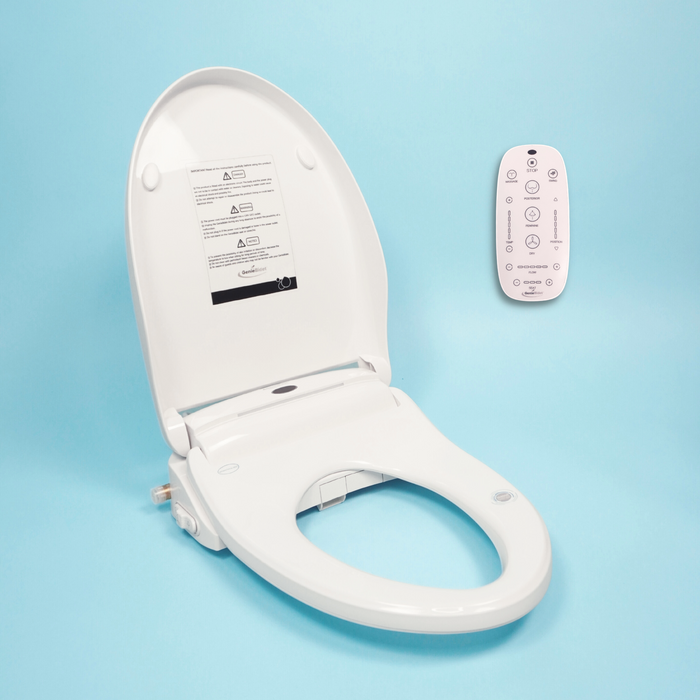
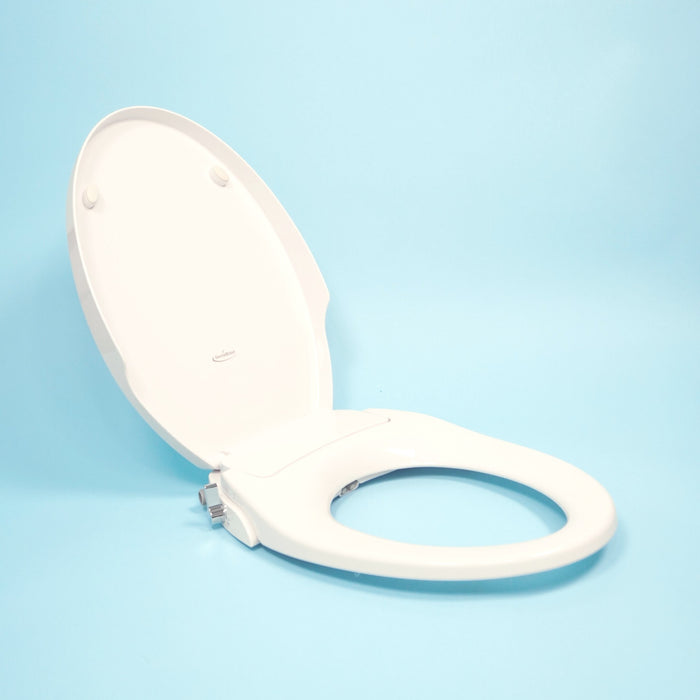
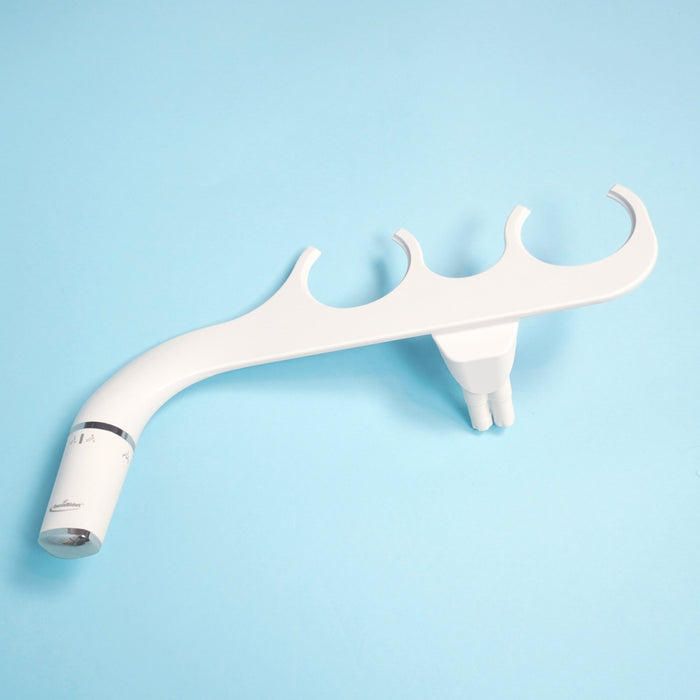
That's the whole idea behind a bidet seat. GenieBidet's Classic seat installs like a normal toilet seat in about 20 minutes, with dual retractable, self-cleaning nozzles for rear and feminine washing, adjustable water pressure, and a slow-closing lid. The water runs at ambient, room temperature — there's no heating element, no electricity, no wiring to add, nothing to fail. It's not a gadget. It's the low-tech fixture that a lot of the world adopted decades ago, updated to bolt straight onto a standard American toilet.
No ad campaign spent 21 years and 500 commercials convincing Americans this existed. There was no fictional grocer scolding anyone into trying it, no jingle, no Top 10 country song written about it. It's simply been sitting there the whole time, in most of the rest of the world, working the way water always has. You can look at the GenieBidet Classic seat here and decide for yourself whether softness was ever really the point.