

· By David Olu
The Physics Behind Every Bidet Attachment (No Power Needed)
A bidet attachment has no motor, no pump, and no battery — and it still throws a controlled stream of water hard enough to clean you. The reason is sitting inside your walls already: your home's plumbing is doing all the work.
The Pressure Was Already There
Most residential water systems run between 40 and 80 PSI, with 80 PSI set as the practical ceiling under the Uniform Plumbing Code before pressure-reducing valves are required. That's a wide safety margin above what a bidet attachment needs to function. A coherent spray — the kind that cleans rather than just wets — starts forming at around 20 PSI. Below that threshold, water doesn't stream, it dribbles.
Put another way: even a house with weak plumbing, sitting at the low end of that 40 PSI range, still has double the pressure a bidet attachment requires to work properly. The margin exists because plumbing codes are written for showers, washing machines, and multi-story buildings, not for a single nozzle near a toilet. A bidet attachment is a low-demand device riding on infrastructure built for much bigger jobs.
So a non-electric bidet attachment isn't generating pressure from nothing. It's tapping into a line that's already running two to four times higher than the minimum it needs, then narrowing that flow through a small nozzle opening. Narrow the path a water stream travels through and, at a fixed volume, the speed of the water goes up — the same principle that makes a garden hose spray harder when you pinch the end.
Why It Doesn't Feel Like a Fire Hose
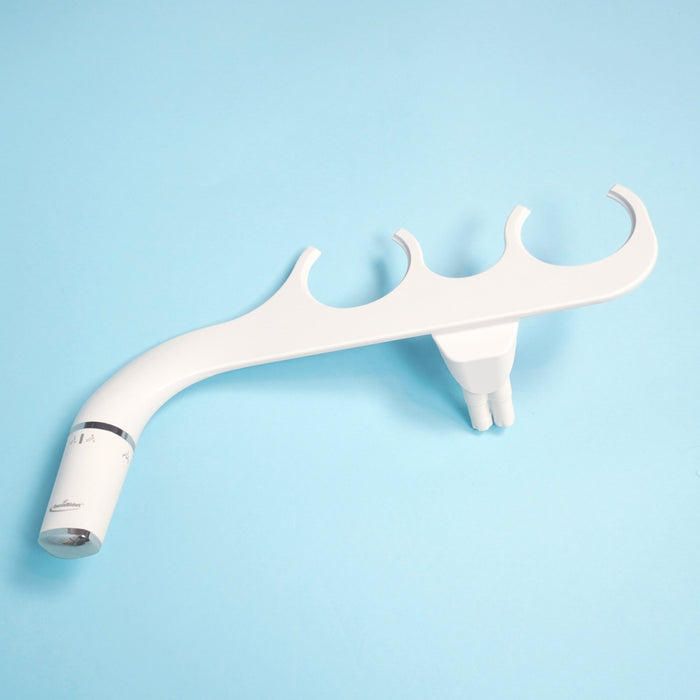
If your home is delivering 60 or 70 PSI at the wall, why doesn't the spray feel like a pressure washer? Because the attachment isn't just narrowing the opening — it's also regulating it. The adjustable dial on a bidet attachment works like a valve, letting you dial the output down from that full line pressure to something closer to 10 to 30 PSI at the nozzle itself, which is the range most people find effective without being uncomfortable. You're not fighting your home's water pressure. You're throttling it down to a setting you control by hand, in real time, every time you use it.
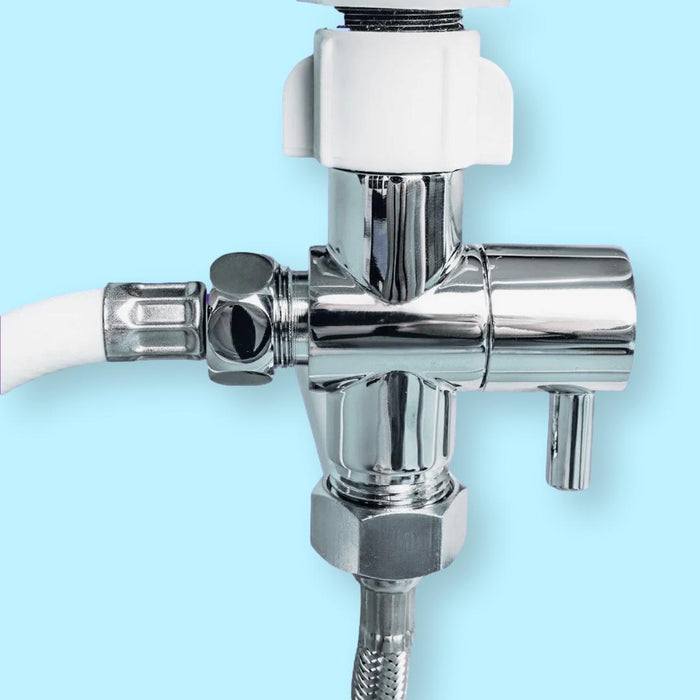
This is also why installation instructions matter more than most people expect. A T-valve installed incorrectly, or a supply line with a kink, can drop pressure below that 20 PSI spray threshold — which is usually the actual cause when someone says their attachment "isn't working," rather than any flaw in the attachment itself.
No Pump, No Wiring, No Point of Failure
Electric bidet seats solve a different problem: homes with unusually low water pressure, where a booster pump compensates for a weak supply line. But most US homes don't have that problem. They have plenty of pressure and no nearby electrical outlet, which is a code issue, not a plumbing one — bathroom outlets near a toilet have to be GFCI-protected, and running new GFCI wiring is its own project with its own cost.
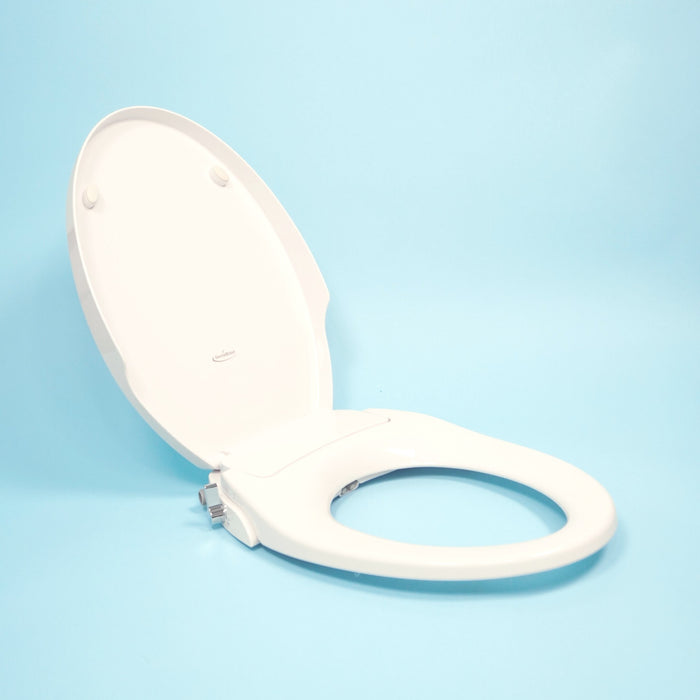
A non-electric attachment sidesteps that entirely. There's no pump to fail, no motor to burn out, and no cord to route around a toilet tank. The only moving parts are a valve and a nozzle, both driven by pressure your house is generating around the clock whether you use it or not.
Your Bathroom Was Already Built for This
Here's the part worth sitting with: you didn't need to upgrade anything to make this work. The plumbing running to your toilet right now has more than enough pressure to power a bidet. The only thing missing was a way to direct it.
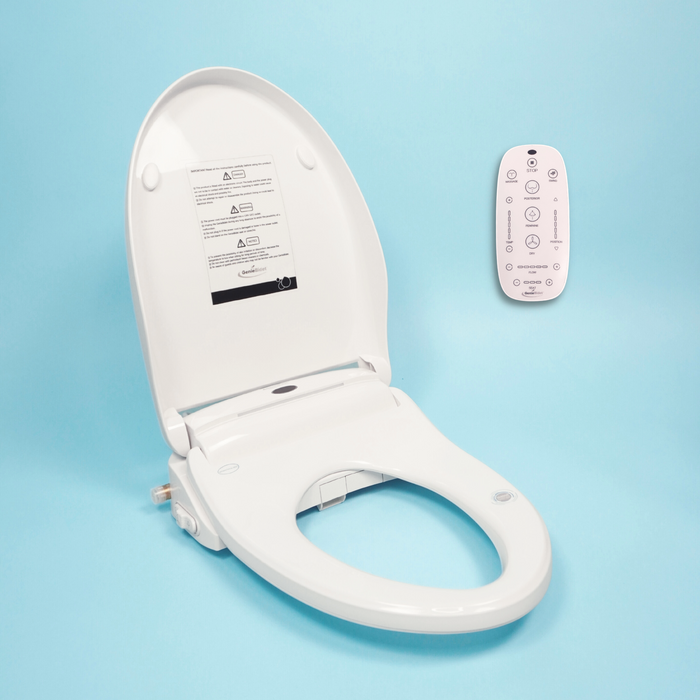
That's the entire engineering case for a bidet attachment — it's a mechanical answer to a problem your house already solved decades ago when it was plumbed. GenieBidet's attachment connects to your existing supply line with a T-valve, no electrician or new wiring required, and lets you control that pressure with an adjustable dial. It's a 15-minute install because the hard part — 40 to 80 PSI of water pressure, already routed to your toilet — was finished before you moved in.