

· By David Olu
The Non-Electric Bidet Idea America Gave Away to Japan
In 1964, a 24-year-old ad man from Brooklyn cobbled together spare parts to build his father a device that would wash him after using the toilet. It was a simple, non-electric bidet idea: water instead of paper, nothing plugged in. Sixteen years later, a company on the other side of the Pacific turned that same idea into an electrified product that has now sold more than 70 million units.
A Garage Project for His Father
Arnold Cohen ran an advertising agency on Fifth Avenue before he ever thought about toilets. His father suffered from a painful chronic condition, and doctors suggested that washing with water would hurt less than wiping with paper. Cohen spent two years assembling odds and ends into a toilet-seat attachment with a hose, patented the design, and named it the American Sitzbath. He founded the American Bidet Company to sell it.
It did not go well. Cohen took out illustrated newspaper ads and hauled the device to trade shows, but as he told Miami New Times in 2007, "ninety-nine percent of Americans did not know what a bidet was." The fixture carried a whiff of European bathroom culture that most American buyers had no context for, and sales stayed modest for years.
The Phone Call From Tokyo
In 1964, a Japanese trading company called Nichimen Jitsugyo took notice of Cohen's invention and invited him to Japan. The company began importing his sitz baths, initially aimed at hospitals and nursing homes, where doctors saw the appeal for bedridden patients right away. By 1969, the plumbing manufacturer Toto had started building its own version domestically, adapting Cohen's mechanism to Japanese plumbing and electrical standards.
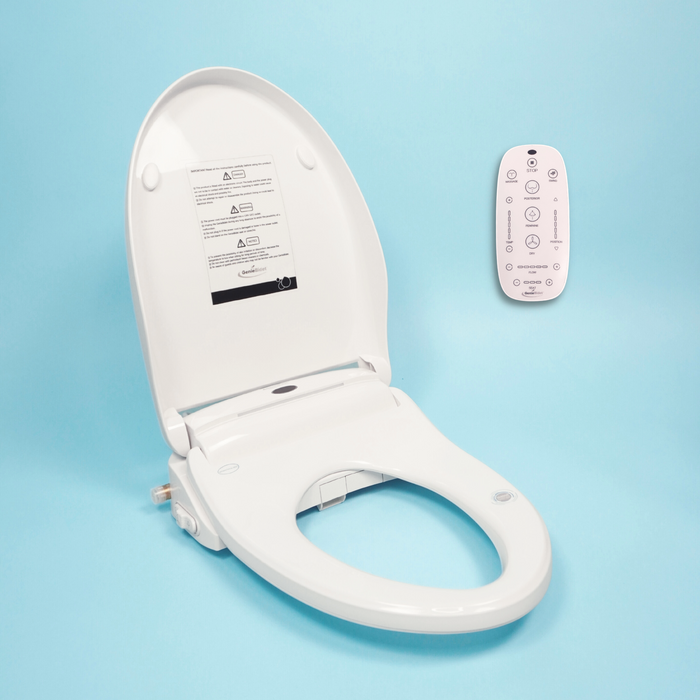
In 1980, Toto launched a refined, electrified version under a new name: the Washlet. There was no reliable data on how to angle the spray, so engineers did the obvious thing — they surveyed their own employees to figure out where to aim it. From there, Toto layered on heated seats, warm water, and eventually remote controls and sleep-mode electronics. The Washlet became a fixture of Japanese bathrooms — Toto has since certified the original G model as an official piece of the country's mechanical engineering heritage — and as of 2025, the company has sold more than 70 million units worldwide.
None of that came from Cohen's original design. It came after. His 1964 concept was the seed; Toto grew the tree, added the fruit, and put its own name on it.
Cohen watched from Florida, where he had relocated the American Bidet Company in 1971. His own sales never approached that scale — by his own estimate, he sold a few hundred thousand units over his career, a fraction of Toto's tens of millions. Still, he seemed at peace with how the story turned out, describing Toto's success as a tribute to the idea he'd started with rather than a loss he'd suffered.
What Got Left in Japan
Here's the part of the story that rarely gets told: everything that made the Washlet expensive and complicated — the heating element, the electronics, the remote — was added after Cohen's original idea left the country. His version was a simple mechanical attachment built to solve one problem: water cleans better than dry paper. The circuit boards, warm-water tanks, and control panels came later, bolted on to justify a premium retail price.
Cohen kept manufacturing his own bidets out of a factory-store in Florida for decades. He wasn't competing on volume. He was still selling the original pitch: water instead of paper, nothing more complicated than that.
That's worth remembering the next time a bidet seat gets pitched to you as a luxury gadget. The core idea an American invented in a spare bedroom in 1964 didn't need a power source. It needed a hose and decent water pressure.
The Original Idea, Minus the Electronics
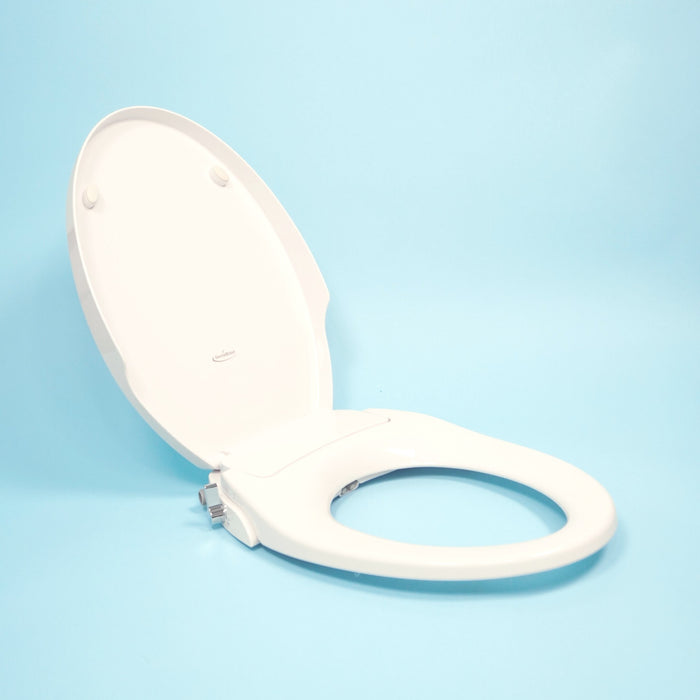
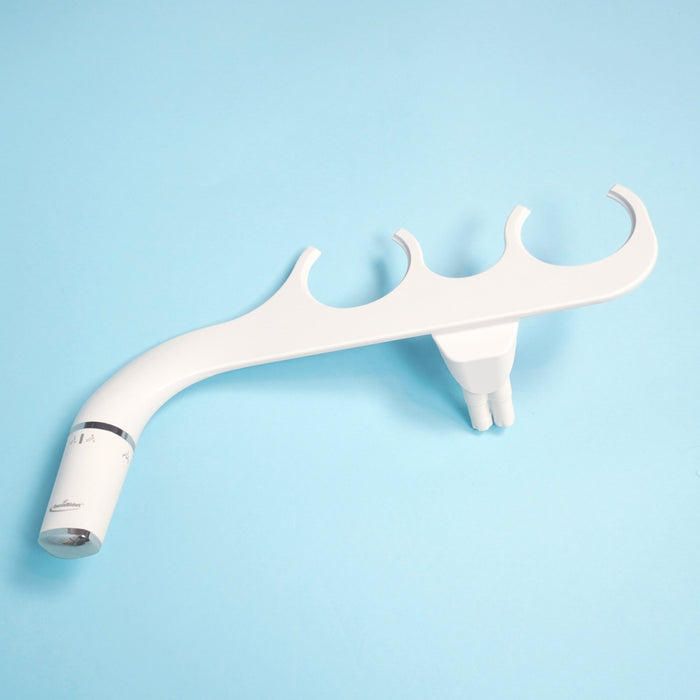
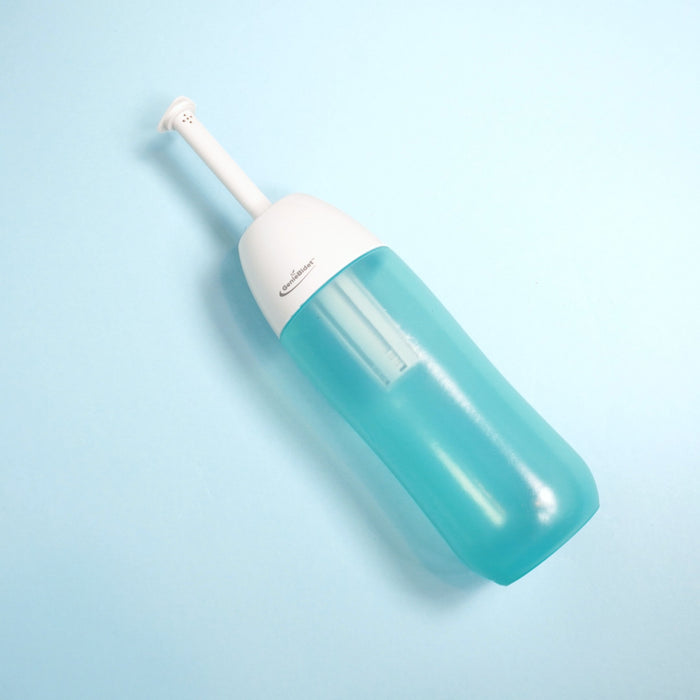
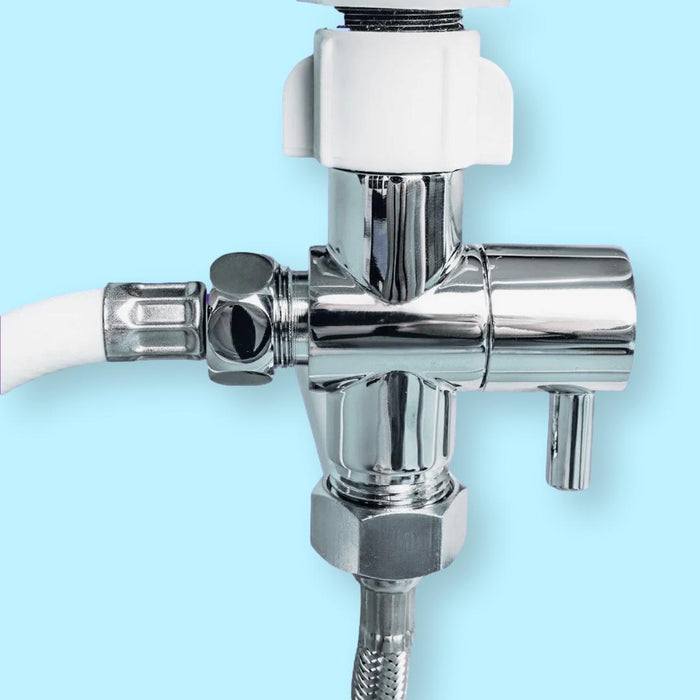
A non-electric bidet attachment is closer to what Cohen originally built than the $1,000+ heated systems that descended from it. It runs on your existing water line, installs in about 15 minutes without an electrician, and skips the heating elements, motors, and remotes that turned his simple fix into a luxury appliance. GenieBidet's bidet attachment is built on that same original premise — clean with water, not power — for a fraction of what the electrified version costs. Sixty years after a Brooklyn ad man tried to sell America on the idea, it's still the part worth keeping.