

· By David Olu
The Queen's Toilet and the Non-Electric Bidet Attachment
The first flush toilet in England was built by a poet who kept getting kicked out of the royal court. His name was Sir John Harington, his godmother was Queen Elizabeth I, and his machine ran on nothing but a tank of water and a turn of the hand — the same principle behind today's non-electric bidet attachment.
That is not where most people expect the story of the toilet to start. It usually starts with a man named Crapper. He shows up later, and he is not the hero.
A Courtier With a Dirty Sense of Humor
Harington was born in 1561 into a family with close ties to the Tudors. Elizabeth stood as his godmother. He also grew up with a mouth that got him in trouble.
According to Britannica, he was first banished for passing around a racy translation of an Italian poem among the ladies of the court. His punishment was strange and very Elizabethan: stay away until you translate the entire epic. He did. The full English version of Orlando Furioso came out in 1591 and is still praised as one of the best translations of its era.
Somewhere in that same stretch, he designed a flushing privy. Guinness World Records credits him with the earliest known flush mechanism, dated to around 1590. A raised cistern held clean water. Turn a handle, and the water rushed into the bowl, pushed a valve open, and sent everything down into a cesspool. He installed one for the Queen at her palace in Richmond.
No motor. No spark. Just gravity doing honest work.
The Book That Got Him Banished Again
Harington did not keep his invention quiet. In 1596 he published a book about it with the title The Metamorphosis of Ajax. The joke was in the name. "Jakes" was Tudor slang for a privy, so "a jakes" became "Ajax." He signed it with a pen name, Misacmos, which translates roughly to "hater of filth."
The book mixed plumbing plans with bawdy bathroom humor. Britannica describes the writing as more Rabelaisian than mechanical, which is a polite way of saying it was crude. Elizabeth banished him from court a second time.
So the man who gave England its first working flush toilet became better known as the Queen's "saucy godson." His invention mostly vanished with him. It would take close to two centuries for anyone to file a patent on the idea.
The Watchmaker, the Flap, and the Plumber
In 1775, a Scottish watchmaker named Alexander Cumming earned the first patent for a flushing toilet. His big idea was a bend in the pipe below the bowl. That S-shaped curve holds a small pool of water, which blocks sewer gas from drifting back into the room. Look under any toilet today and you will still find a version of it.
Three years later, in 1778, Joseph Bramah patented an upgrade that swapped Cumming's sliding valve for a hinged flap. His design became one of the leading toilets for the next hundred years.
Then came Thomas Crapper, the London plumber whose name became a punchline. Crapper did not invent the flush toilet. He held nine patents, three of them for water closet improvements such as a floating ballcock, and he ran a business that helped make the fixtures popular. He refined the toilet. He did not create it.
Notice what every one of these designers had in common. Harington, Cumming, Bramah, and Crapper all built machines powered only by water pressure and gravity. Not one of them needed electricity, because there was none to be had. The flush toilet was a triumph of simple mechanics, and it still is. The tank on your toilet today does the same basic job Harington's cistern did in Richmond.
Four Centuries of Fixing Only Half the Problem
Here is the odd part. Every improvement in this history was about the toilet, not the person using it. Harington moved waste away with water. Cumming kept the smell out. Bramah sealed the valve. Crapper made the tank refill itself.
Nobody in that line of inventors turned the water toward the body. The bowl got cleaner and cleaner. The human being was left with whatever was on hand, and later, a roll of dry paper.
That gap is still sitting in most American bathrooms. You have a pressurized cold-water line running into your toilet tank right now. It exists for one job: refilling the tank after each flush. It could do a second job, and in most homes it never gets the chance.
Your Toilet Already Has Harington's Engine
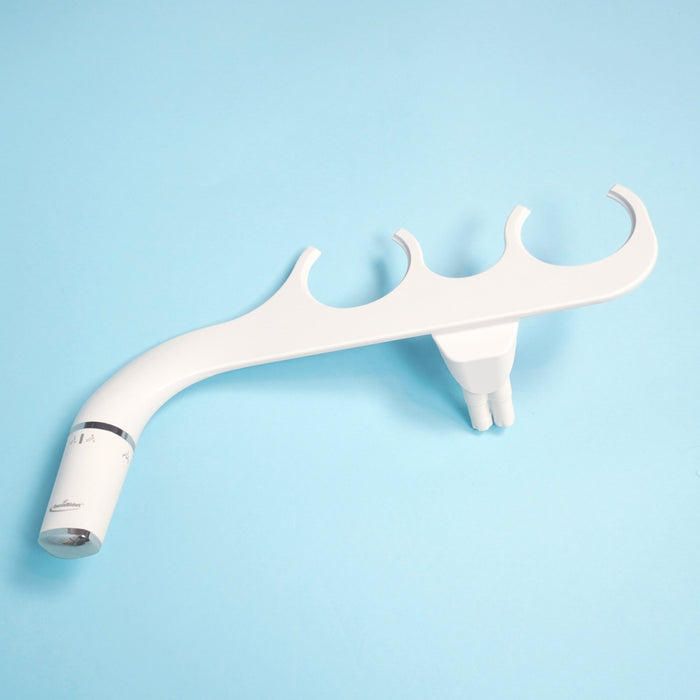
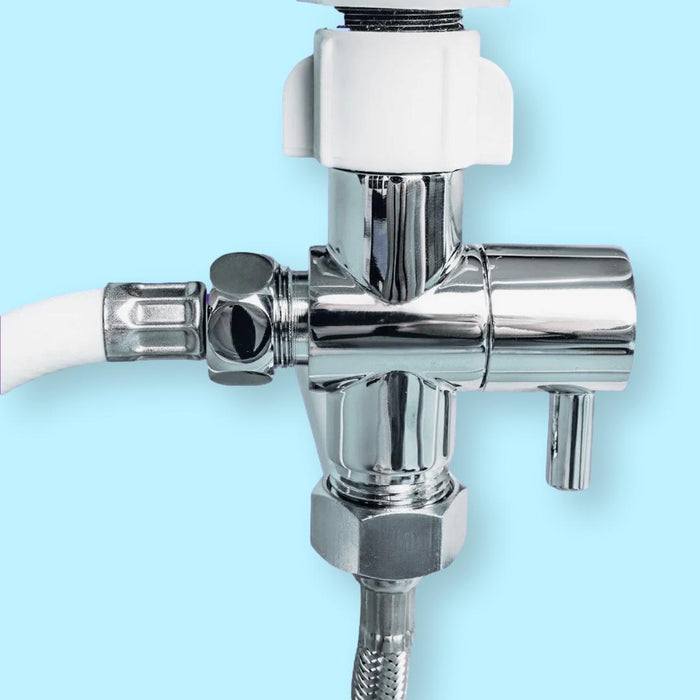
The pipe that feeds your tank is the modern heir to that Elizabethan cistern. It carries clean water at household pressure, and it needs no outlet, no wiring, and no electrician. That is exactly what makes a non-electric bidet attachment work. A small T-connector splits the line. One side keeps filling the tank. The other side feeds a slim nozzle under your seat.
The water arrives at room temperature, straight from the same supply as your tank. There is no heater, no remote, and no app. It is the Harington approach applied to the half of the job he skipped.
Finishing What the Godson Started
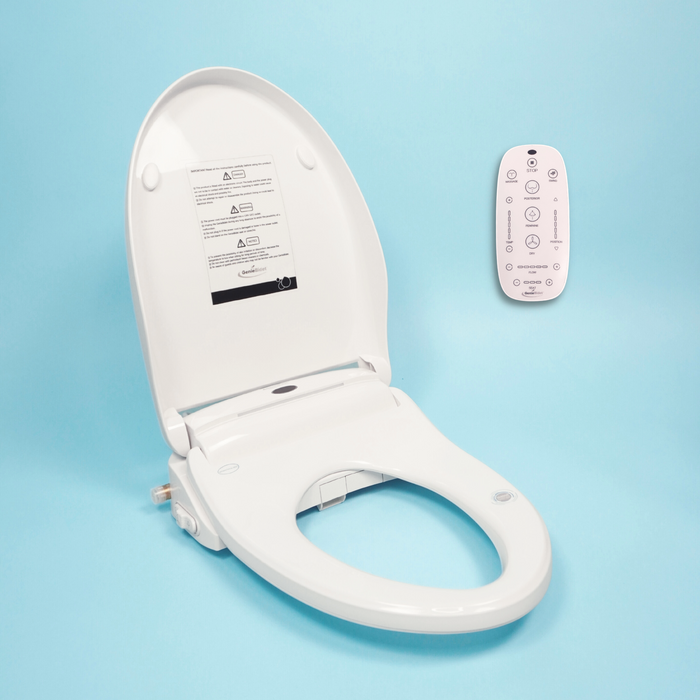
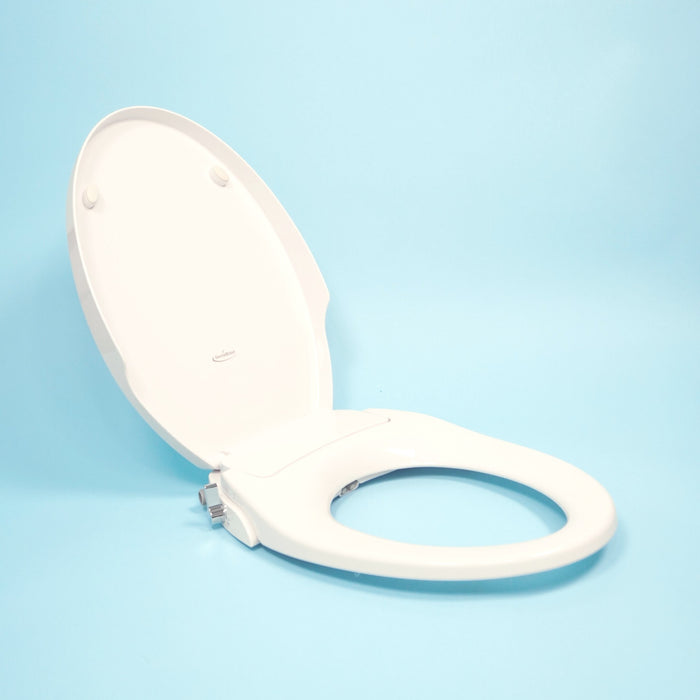
If a Tudor poet could build a working flush toilet with a wooden cistern and a handle, adding a rinse to your own toilet should not feel like a big project. The GenieBidet non-electric bidet attachment slides in under your existing seat, connects with a T-connector to the water line you already have, and installs in about 15 minutes with basic tools. It has dual self-cleaning nozzles, an adjustable pressure lever, and nothing to plug in.
Harington gave the toilet water. You can give it the other half of the idea. See the GenieBidet attachment here.