

· By David Olu
Why a Bidet for Small Bathroom Layouts Is Still Spanish Law
In one Spanish city, you cannot legally build a new home without a bidet. Not a suggestion, not a design trend — a building code requirement that has survived since 1986.
The city is Zamora, in the region of Castilla y León in western Spain. Its General Urban Planning Plan has required a bidet in every new-build bathroom since 1986, and the rule has been renewed twice since, in 2001 and again in 2011. Zamora is the only city left in Spain where this is still on the books, according to reporting by The Local Spain. The law has forced generations of Zamora builders to solve the same puzzle homeowners everywhere still face: fitting a bidet for small bathroom layouts without the space to spare. Everywhere else in the country, the bidet has been quietly disappearing.
How a plumbing fixture became a national habit
Bidets arrived in Spanish homes in the 1960s, during the Franco era, and quickly became a status symbol. By the 1970s and 1980s, they were as ordinary as a sink or a toilet in most Spanish bathrooms. The habit was backed by regulation, not just taste: Spain's official "protected housing" system made bidets mandatory in apartments with four or more bedrooms, and the fixture was required in all social housing built between 1976 and 1978. For a couple of decades, skipping a bidet in a new Spanish home wasn't really an option.
Spain wasn't alone. Italy passed its own bidet mandate in 1975 through a health ministry decree, and Portugal did the same that year through a national housing decree, according to citations compiled on Wikipedia. Across southern Europe, the bidet went from luxury import to building-code requirement inside a single decade.
Then the bathrooms got smaller
The turn came in the 1980s. Spanish apartments started shrinking, showers replaced bathtubs, and every square foot of a bathroom became something to negotiate. A stand-alone bidet is its own fixture: its own footprint, its own plumbing hookup, its own real estate next to the toilet. As homes got smaller, that made it one of the first things designers cut.
The decline has been steep. Between 2010 and 2020 alone, the number of bidets installed in Spanish homes fell by 60%, according to The Local Spain. Today you're more likely to find one in an older, unrenovated apartment than in a new build — Zamora excepted. One reader commenting on that same report noted that bidets are still required in Tuscany, Italy too, and joked that it's "a problem if the bathroom is very small." That's the exact tension: the fixture that a law demands is often the fixture a small floor plan can't spare.
There's a footnote worth noting here. During the early days of the Covid-19 pandemic, when toilet paper vanished from Spanish supermarket shelves, Google searches for "bidet" in Spain spiked by 1,000%. People wanted the function back. They just didn't necessarily want to find four square feet for a second fixture to get it.
The bathroom you already have doesn't need to shrink for this
That tension isn't unique to Spain. Plenty of homes, apartments, and remodels everywhere skip a bidet for exactly the same reason: there's no room, and ripping out a wall to add one isn't realistic. But the reason bidets needed their own footprint in the first place was a plumbing design from a much older era — a separate basin, its own faucet, its own drain. That's not how the function has to be delivered.
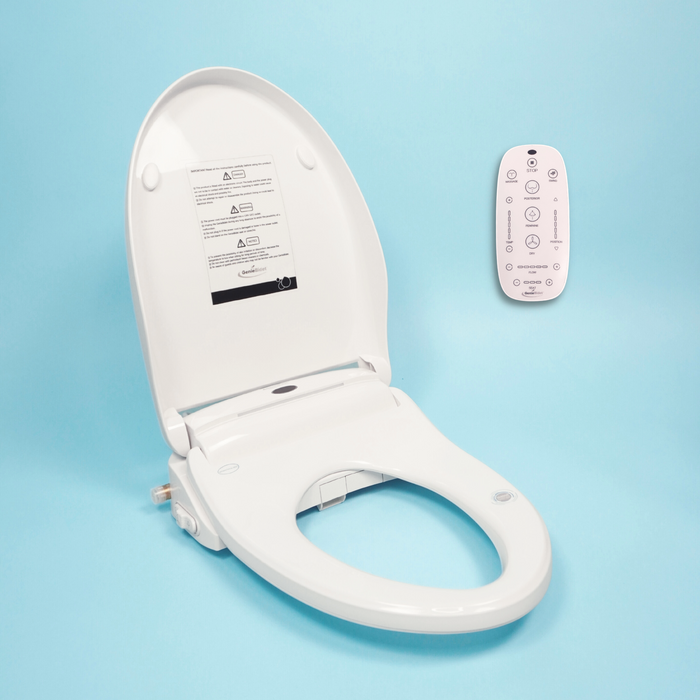
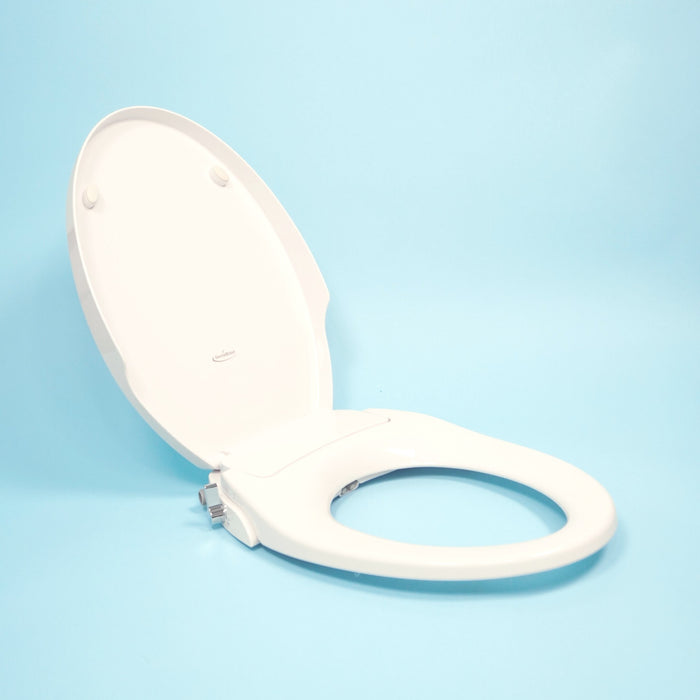
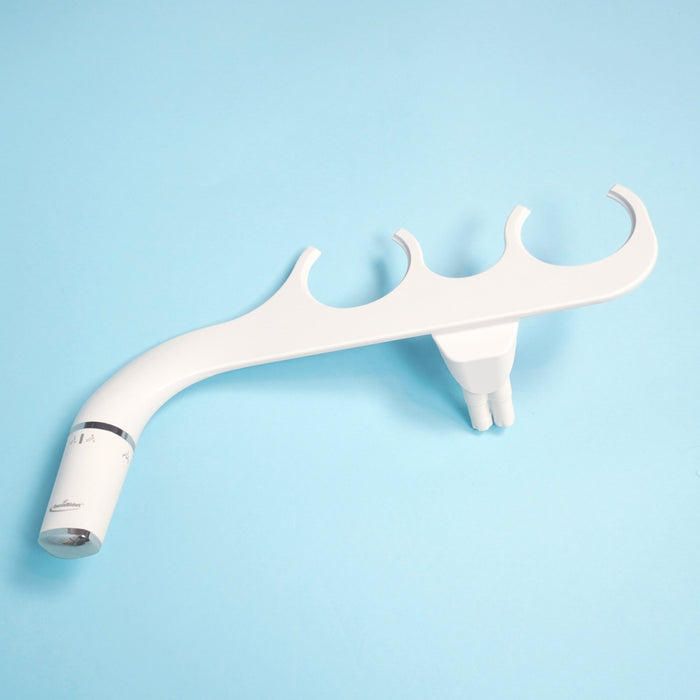
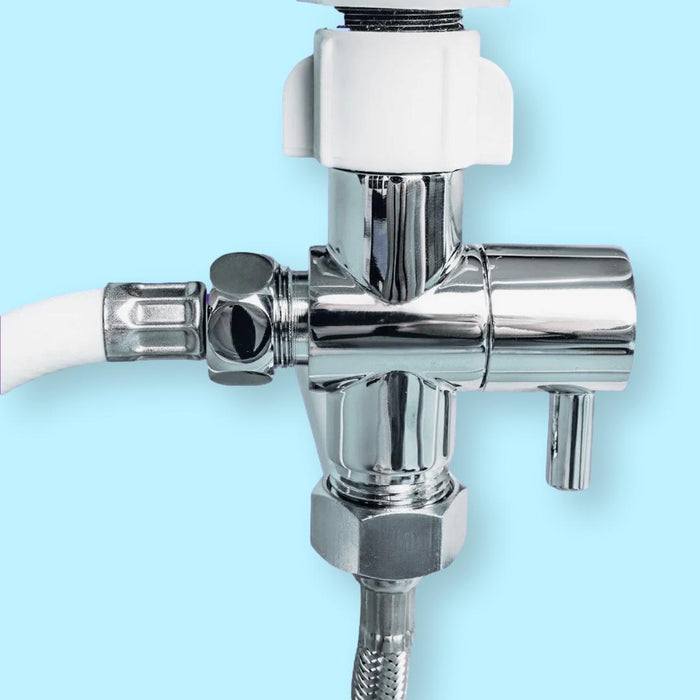
A slim bidet attachment mounts underneath your existing toilet seat and connects to the toilet's own water supply. There's no second fixture, no extra floor space, no rerouted plumbing. GenieBidet's ultra-thin attachment is built specifically for that constraint: it installs in about 15 minutes, needs no wiring since it runs on ambient, room-temperature water, and adds essentially nothing to the footprint of the toilet you already have. It's the modern answer to the exact problem that shrank Spain's bathrooms in the first place — you get the bidet for small bathroom layouts without giving up the shower, the sink, or the walking space around them.
You can see the GenieBidet toilet attachment here and check the fit for your own toilet before deciding. No demolition required, and no fifty-year-old building code needed to make the case for you.